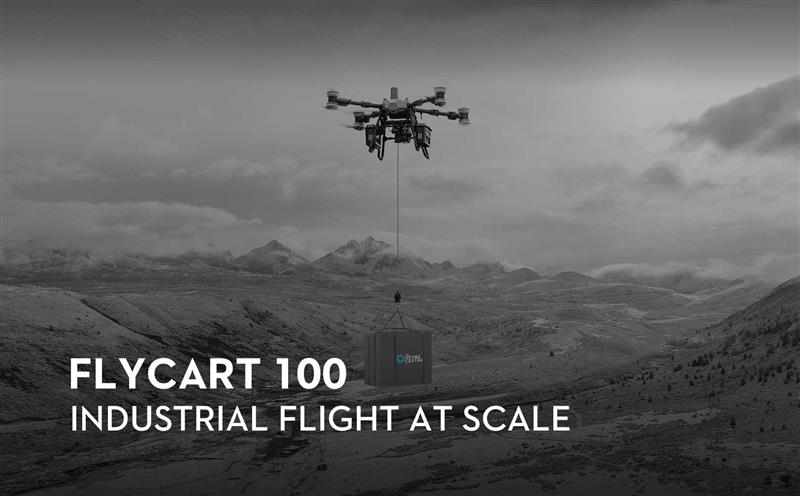
For the GCC, a region currently managing the world’s most ambitious infrastructure and energy targets, the FC100 is a direct response to the “logistics bottleneck.” As mega projects in the region move into peak operational phases, the ability to transport heavy equipment across shifting desert sands and offshore waters has transitioned from a desire to a necessity.
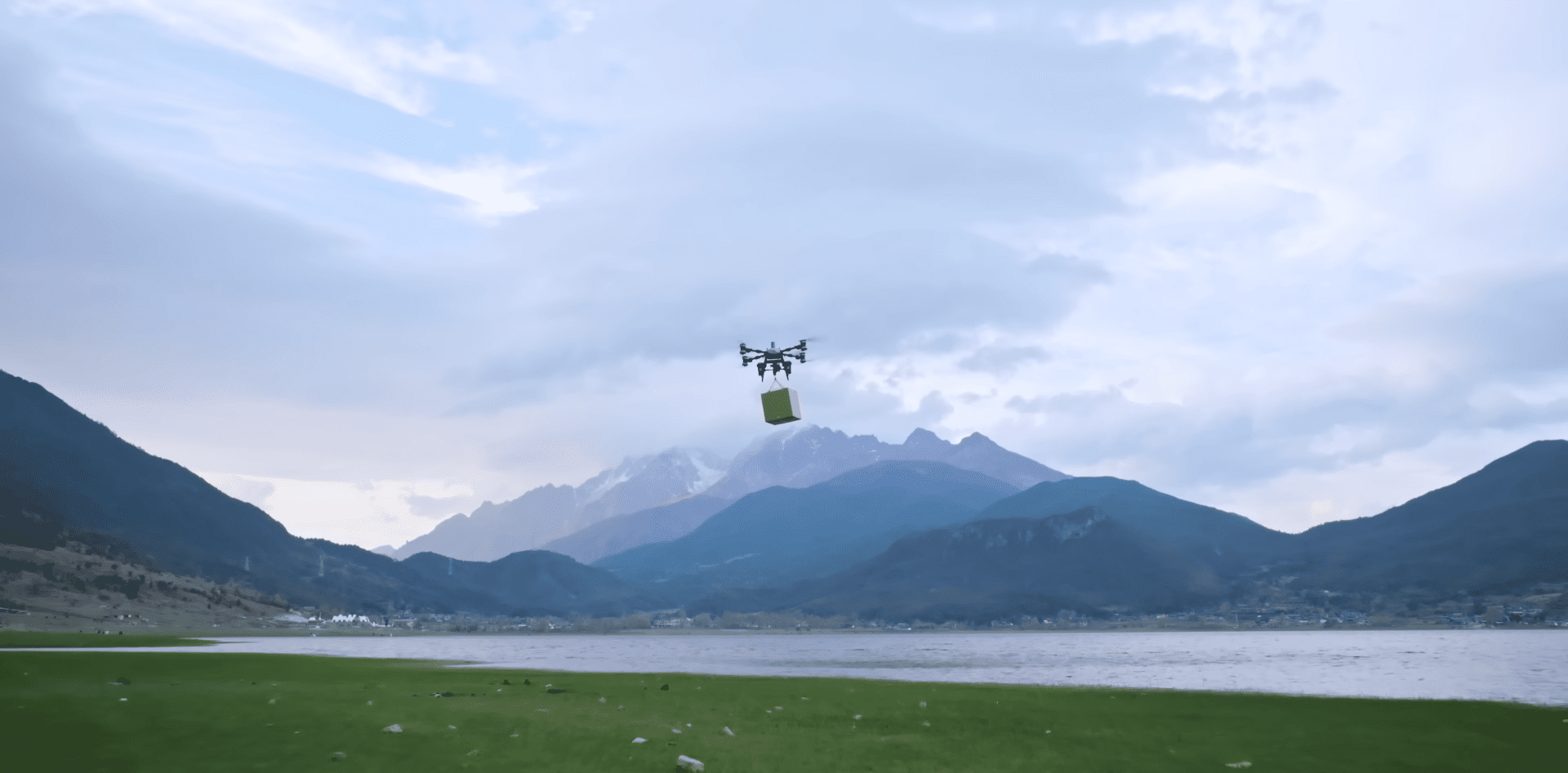
The FC100 is the direct, more powerful successor to the FC30, and the technical jump is substantial. Where the FC30 was a 30kg-class lifter, the FC100 has been overhauled as a heavyweight contender. It features a coaxial four-axis, eight-blade multi-rotor system with massive 62-inch carbon fibre propellers, designed to move a 100kg maximum payload (in emergency single-battery mode) or a reliable 85kg in standard dual-battery configuration.
The improvements over the earlier model are found in every critical metric:
Enhanced Range & Efficiency: The FC100 can haul a 65kg payload over 12km in dual-battery mode, more than doubling the practical weight-to-distance ratio of its predecessor.
LiDAR-Powered Intelligence: One of the most significant upgrades is the shift from the FC30’s radar detection to a high-precision LiDAR and Penta-Vision system. In the low-visibility, dust-heavy environments of regional construction, this allows the drone to build a real-time 3D point cloud of its surroundings, detecting thin wires and scaffolding with millimetric accuracy.
Flagship Winch System: The winch has been completely redesigned with a dual-motor system and a 30-metre cable. It now includes updated active anti-sway technology, a vital feature for the region’s high coastal and desert winds, ensuring that 100kg loads remain stable and safe for ground crews.
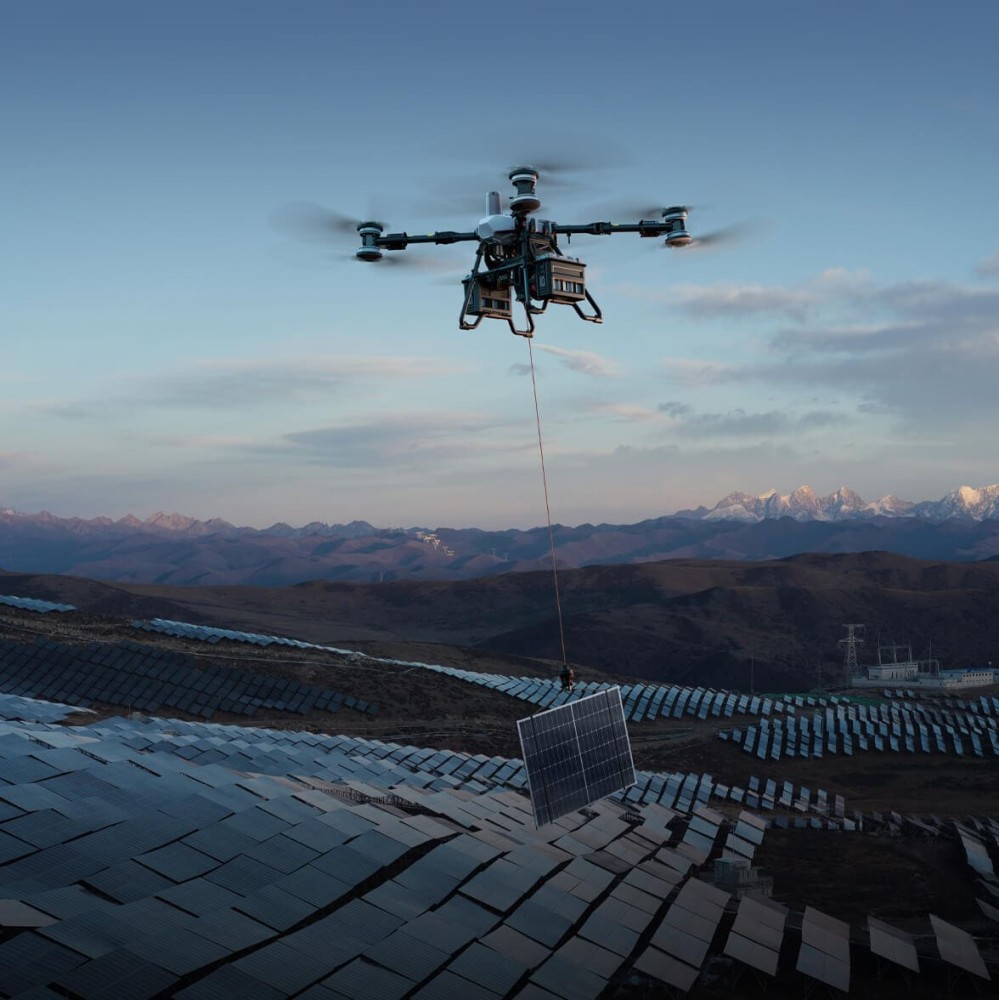
While the FC30 established the ROI for light deliveries, the FC100 is set to boost heavy logistics operations in several high-stakes sectors:
Maritime and Offshore Operations: The UAE and Saudi Arabia sit at the centre of global shipping and offshore energy. Historically, supplying tankers at anchor or rigs in the Arabian Gulf required expensive support vessels. The FC100’s winch mode allows it to deliver critical 100kg spare parts or supplies directly to a moving deck, bypassing port congestion and sea-state delays. This reduces “vessel-idle time,” saving operators thousands of dollars per hour.
Megaproject Infrastructure: In the vast, unpaved development zones of the Kingdom, moving tools or materials usually means a slow trek across rough terrain. The FC100 turns the air into a high-speed delivery corridor, delivering specialised equipment across site boundaries in minutes. It eliminates the “idle time” of high-value workforces waiting for parts, ensuring that project timelines remain on track regardless of ground conditions.
Power Grid & Utility Maintenance: The Middle East’s utility networks are expanding at a record pace. The FC100 is now being deployed to haul heavy insulators, cables, and tools up to transmission towers in mountainous or remote desert areas. By replacing manual hauling and expensive crane setups, utility firms can perform critical repairs faster and with significantly less risk to human life.
Heavy-Payload “Last-Mile” Logistics: In the rapidly expanding urban and industrial hubs of the GCC, traditional last-mile delivery often hits a ceiling at 5–10kg. The FC100 redefines this as Heavy-Load Last-Mile Delivery, capable of transporting bulk shipments, heavy consumer goods, machinery components, or palletised construction materials directly to the point of use. By bypassing road congestion and removing heavy vehicles from fragile urban or site-specific infrastructure, it streamlines the final leg of the supply chain with unprecedented weight capacity.
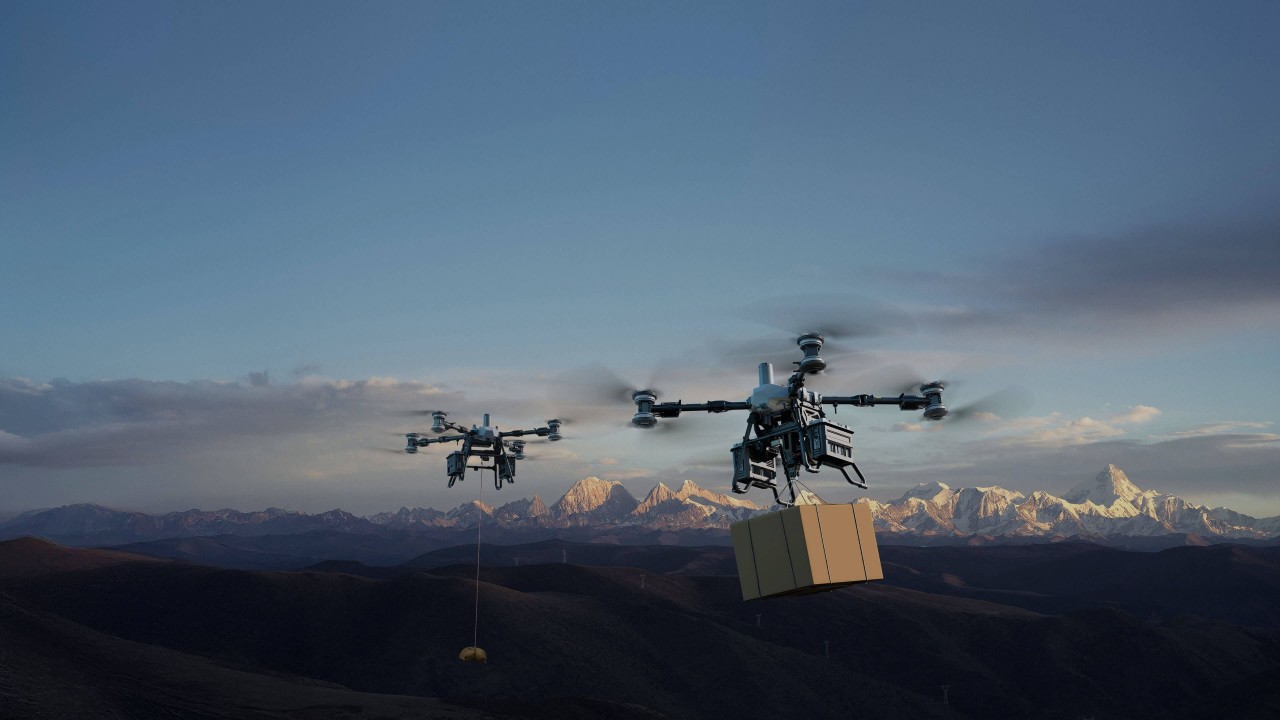
Beyond commercial logistics, the FC100 is proving to be an essential tool for regional emergency response and disaster recovery. When floods or sandstorms cut off road access, the 100kg payload capacity allows for the rapid transport of significant quantities of medical supplies, water, or heavy communication relays to isolated communities. Unlike smaller drones, the FC100 can carry enough weight to make a meaningful impact in a single flight, while its IP55 rating and integrated parachute system ensure it can operate safely in the chaotic environments typical of post-disaster scenarios.
Industrial equipment in the GCC must survive the “heat test.” The FC100 is designed to maintain peak performance even as temperatures push toward 40°C. Its energy system has been upgraded with the new DB2160 batteries, which support 9-minute ultra-fast charging via the D14000iE generator. This ensures the drone stays in the air for back-to-back missions, providing the continuous output required for industrial-scale supply chains.
Get in Touch to Adopt the New Standard!
As the leading regional partner for DJI Enterprise, The Drone Centre provides the end-to-end support, from regulatory support to advanced pilot training, required to integrate the FlyCart 100 into your operational workflow.
Connect with our technical team today for an operational consultation.