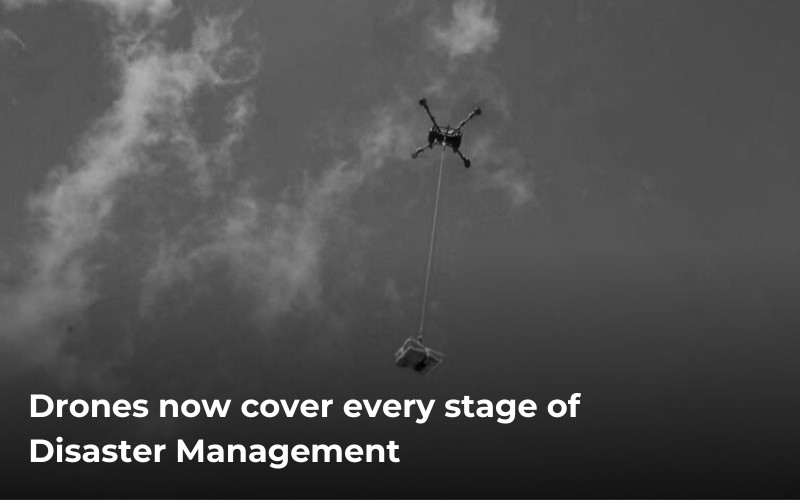
A drone-powered disaster response needs a system: the right drones working together, with a trained team behind them. In this month’s issue we look at how these tools are being used for rapid response, search and rescue, and how a public safety team can build them into one working setup.
A drone response usually follows three steps: find people, support the rescue, then get supplies in. Each step suits a different kind of aircraft. A working disaster response and recovery system might look like this.
Compact thermal drones such as the Matrice 4T are the first to launch. They pick up body heat at night, through light smoke and fog, and across broken ground. Their thermal camera reads real temperatures, so a crew can tell a person from a sun-warmed rock. A laser rangefinder gives the exact position of what the camera sees up to 1.8 km away, so the ground team gets a location without the drone flying over it. The Matrice 4TD does the same job from a @DJI Dock 3, launching remotely within minutes of receiving an alert.
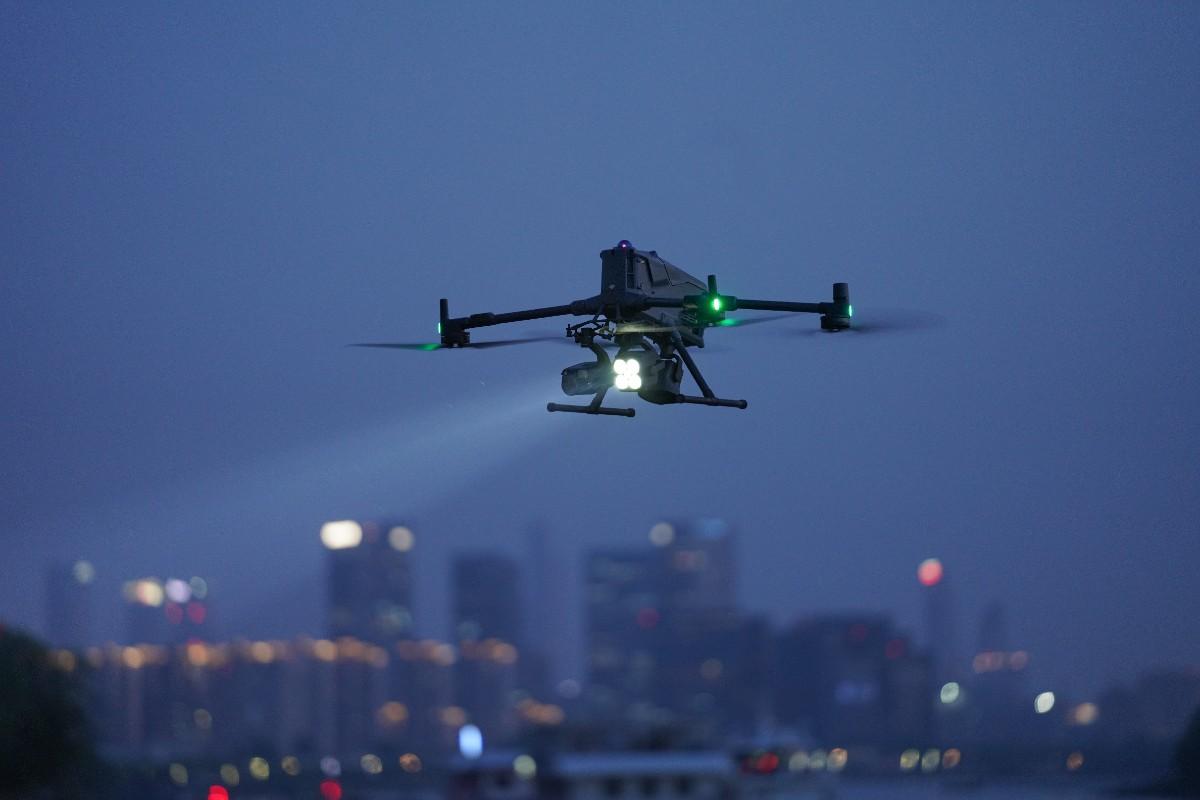
The Matrice 400 can carry up to seven payloads at once. On one flight it can hold a zoom and thermal camera over a scene, light it with a spotlight, and speak to people through a loudspeaker. It can also act as a relay, passing the video signal on for another drone that has flown behind a hill or into a valley. For a command post, that means one aircraft does the work of several.
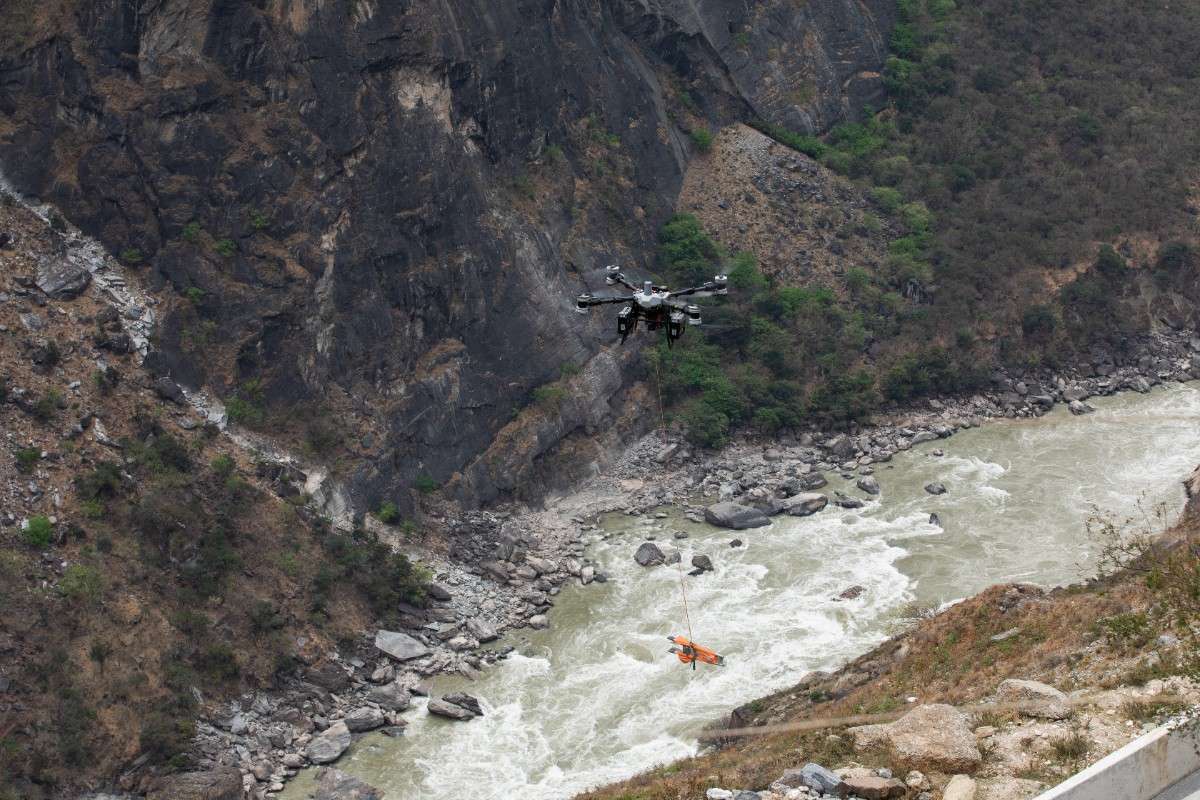
Once people are found, supplies have to reach them. The FlyCart 100 can carry 65 kg over 12 km, or 80 kg over a shorter 6 km. It lowers supplies on a 30 m winch, so it never needs a place to land. Life jackets, water, medicine and radios can reach a rooftop or a cut-off village in minutes.
During floods, thermal drones sweep the valley and find people on roofs, vehicles and high ground. A loudspeaker tells them to stay put because help is coming, which can stop people trying to wade through fast water. A relay drone keeps the video feed alive at the command post when hills block the signal. Heavy-lift drones then lower flotation and supplies to keep people safe until boats or helicopters arrive.
Thermal search tends to work best at night, when a lost or injured hiker’s body heat stands out against rock that has cooled. Drones help in daylight too. In April, two tourists lost their way in the Hatta mountains and called Dubai Police for helpm suffering from severe exhaustion. The Hatta Brave Unit used drones to find them in the rugged terrain, and rescue teams and paramedics reached them and brought them down for treatment. Once a drone finds someone, a spotlight guides rescuers to the spot, and a heavy-lift drone can lower water or a radio to keep the person going until the team arrives.
In a building or plant fire, responders first need to know where the fire is spreading and whether anyone is still inside. Thermal drones show hot spots through smoke and help commanders decide where to send crews, and where not to. A docked drone at an industrial site can be over a fire within minutes of an alarm, giving commanders a view of the scene as their crews arrive.
A person in the water is hard to spot from a boat and easy to lose. A thermal drone flying a search pattern can pick out a swimmer’s head against cooler water. A drone that launches from a ship, such as the Matrice 400, can keep watch over the person until help arrives. A heavy-lift drone’s winch can put a flotation device within reach before the rescue boat gets there.
Buying the right aircraft is only the start. The outcome depends on how they are staged and who runs them. A practical setup for a municipality or civil defence team could look like this:
Then assign clear roles. Every team needs a pilot and an observer for each aircraft, one person in charge of the drop zone, and one person at the command post who turns the drone feeds into decisions. Agree weather limits in advance. Write a shift handover that records which areas have been searched, so no one searches the same ground twice. And coordinate airspace, because drones will share the sky with police and civil defence helicopters.
Finally, practise before it counts. A team that has flown a night flood exercise together will work faster and more safely on the real night than one meeting the kit for the first time.
Why Gulf agencies are preparing now
In late March, Yanas Mountain in Ras Al Khaimah recorded 244 mm of rain. Storms like this are becoming more common: a Khalifa University and National Centre of Meteorology study found the UAE has seen up to two extra stormy days a year since 2000, and they are growing more intense.
With wadis that fill fast, single-route mountain roads and much of the population on the coast, the coming storms will test every response team in the region. Teams that can put drones in the air within minutes will find people faster and reach them sooner.
The wetter winter months are close. Any agency responsible for flood-prone wadis, mountain trails, industrial zones or coastline should know now which drones it would launch, who would fly them and where they would be based. In the first hour of a disaster, a prepared team can make all the difference to the people waiting for help.
Preparing for the wet season, setting up a drone unit or reviewing your emergency response plan? Talk to our team now and we’ll help you choose the right aircraft and plan how to set them up before the next storm or emergency.
WhatsApp us today: +971 52 209 2367