The box itself is the easy part. Whether it delivers on that promise depends on what the site around it provides. Before committing to a drone-in-a-box, it helps to know exactly what the system needs from your project to run reliably. In this article, we walk you through those requirements, with the UAE’s operating conditions in mind.
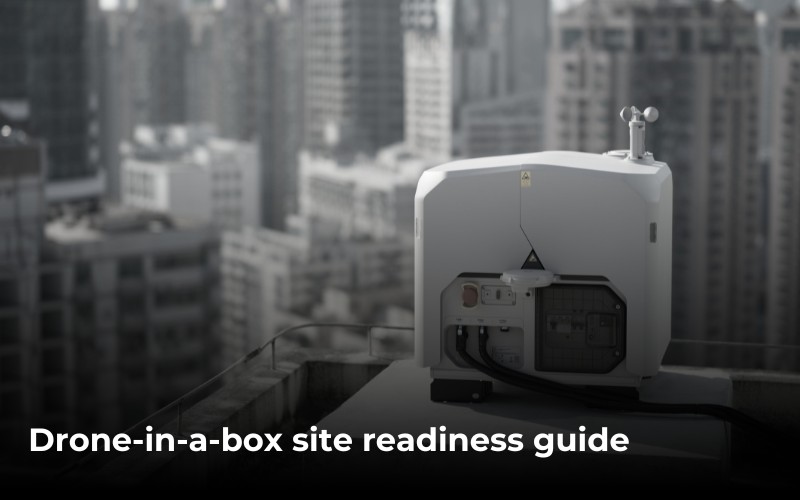
A drone-in-a-box is an automated docking station housing a drone (UAV) that launches, flies a pre-set route, lands, recharges, and transfers data on its own, with no pilot travelling to the site. It turns a drone from a piece of equipment someone operates into a permanent site sensor that runs on a schedule.
That autonomy is the whole appeal, and it is also the source of every requirement that follows. A system meant to run unattended, day after day, in the open, needs more from its surroundings than a drone you carry out of a case and fly by hand. The Middle East commercial drone market has grown past USD 1.2 billion, and docking systems are now built and integrated within the UAE, so the technology is proven and the regulations are rapidly developing to accommodate drone-in-a-box across the nation.
What does a construction site need to run a drone-in-a-box?
A site needs five things in place:
Miss any one, and the system either underperforms or sits idle.
Here is what each requirement means on the ground.
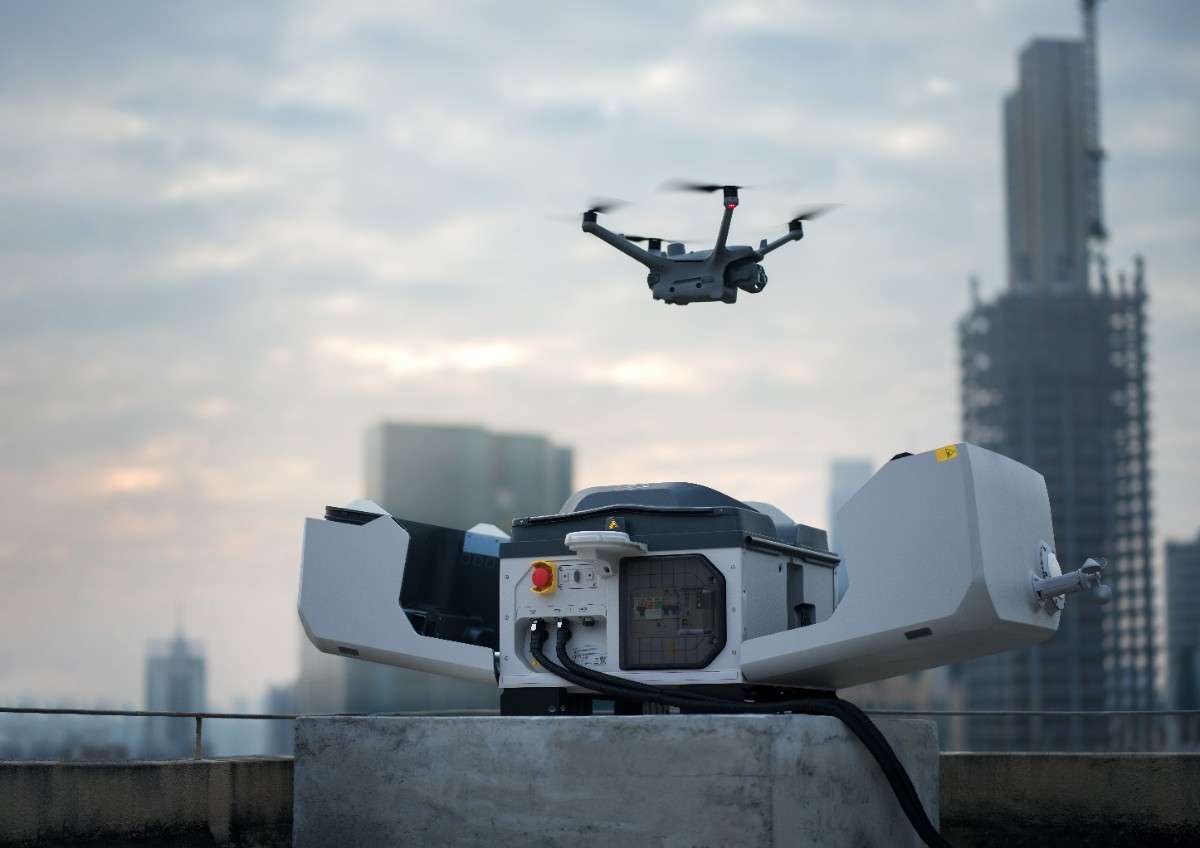
The box needs a fixed, stable base with an unobstructed view of the sky and a clear take-off and landing corridor. On an active site that changes shape weekly, this is less obvious than it sounds. Tower cranes, rising structures, and material stacks all intrude on flight paths over time. The best positions are often a site cabin roof, a perimeter platform, or a dedicated mast, chosen so the drone climbs into clear air before it begins its route. Plan the location against where the build will be in six months, rather than where it stands today. Newly released drone-in-a-box systems like the DJI Dock 3 possess vehicle mounting capability, which makes the system truly mobile, and for construction entities that have multiple sites across a particular region can truly benefit from this new implication.
The dock keeps the drone charged and ready between flights, which means it needs continuous power. A standard site power feed is usually enough, but it should be stable and, ideally, backed up. If the dock loses power mid-cycle, the aircraft is grounded until it returns. On sites where power is intermittent, plan for a conditioned or backup supply to the dock. (Short and momentary lapse in power won’t affect operation since the units have a battery inside however, it is recommended that these units are connected to a continuous power source)

Autonomous flight and same-day data both depend on the box staying online. Most deployments use cellular connectivity, often with more than one SIM across networks, and many add a satellite link such as Starlink as backup so a single network outage does not take the system down. Uploading full-resolution survey data also needs larger bandwidth, so the connection has to carry more than a status update. Test signal strength at the exact mounting point before installation.
UAE conditions test any outdoor system, and a drone-in-a-box has to keep working through them. Summer heat affects battery life and charging behaviour, so the dock’s thermal management earns its place. Airborne dust is constant on construction sites and wears at optics and moving parts, which puts a premium on sealing and maintenance access. Wind sets the daily flight window: most platforms have an operating wind limit, and gusts around rising structures can be stronger than the open-air forecast suggests. Hence the region prefers reliable and weather-proofed systems like the DJI Dock 3 for continued operations.
A drone-in-a-box flying on its own, without a pilot watching it, is a beyond visual line-of-sight (BVLOS) operation. In the UAE, BVLOS is not the default and requires a specific waiver from the General Civil Aviation Authority (GCAA), granted case by case. Many sites therefore run the system with a licensed remote pilot providing oversight, which keeps operations within standard visual line-of-sight rules while still automating capture and processing. Sites in Dubai also coordinate with the Dubai Civil Aviation Authority (DCAA). The practical path is to confirm the approval model for your specific site and airspace before the hardware arrives, so the flight concept and the permissions match.
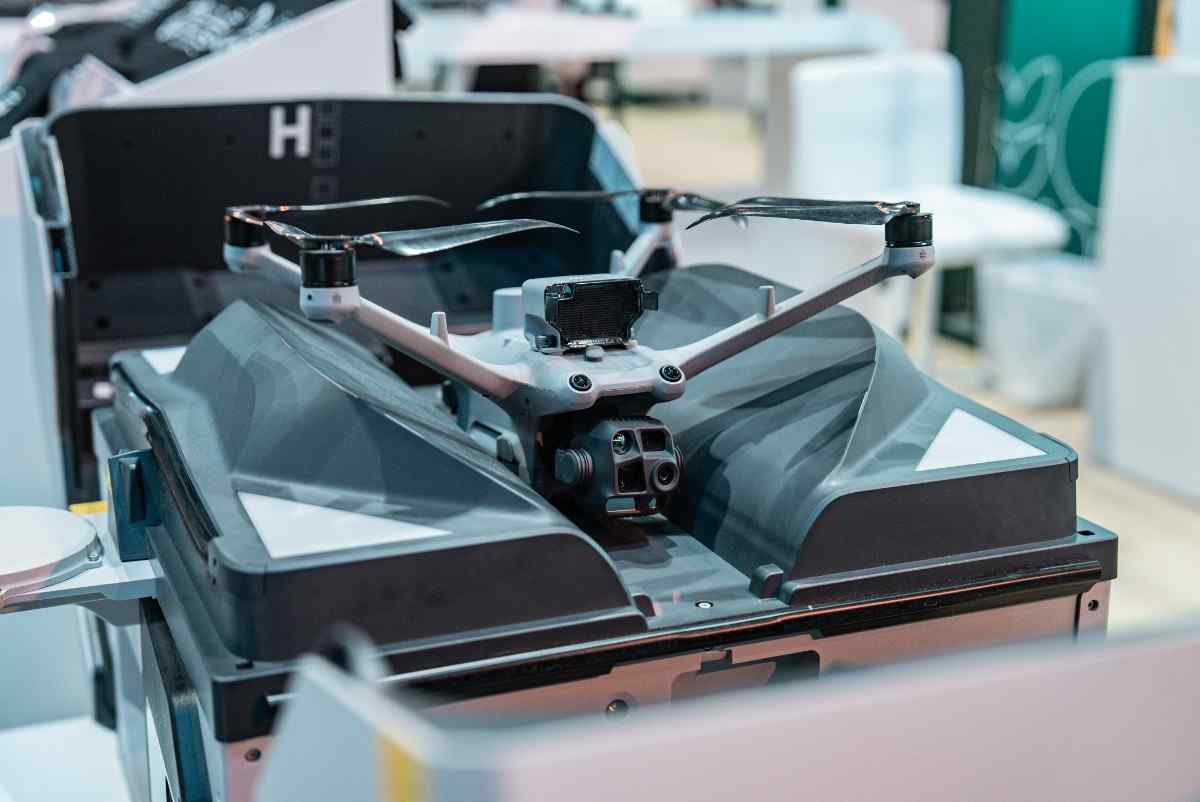
Heat, dust, and wind are the three factors that most affect reliability. High summer temperatures shorten battery life and slow charging, fine dust wears optics and mechanisms and calls for regular cleaning, and wind around tall structures can exceed the drone’s safe operating limit and cancel a flight.
None of this rules out year-round operation. It shapes expectations. A well-specified dock with proper thermal management and sealing handles UAE conditions across the year, provided the deployment plan treats the occasional missed window as normal rather than a fault.
A drone-in-a-box earns its cost when a site needs frequent, repeatable data over a long period: a large project running for a year or more, or a site where daily or weekly capture genuinely changes decisions. For a short project, or one that needs a survey only once a month, periodic surveys flown by a visiting crew are often the more sensible spend.
The honest test is cadence. If you would fly the site several times a week if it were effortless, a permanent system pays back. If a monthly capture answers your questions, you may not need a box on site at all. At The Drone Centre, we scope this with clients before recommending hardware, because the right answer is sometimes a service rather than a system.
Requirement | What the site must provide | Common UAE consideration |
Siting | Stable base, clear sky, take-off corridor | Position against future crane and structure locations |
Power | Continuous, stable mains supply | Add backup where site power is intermittent |
Connectivity | Cellular, ideally multi-network, plus satellite backup | Verify signal at the mounting point |
Climate tolerance | Thermal management, sealing, maintenance access | Heat, dust, and wind limits on flight windows |
Approvals | Flight concept matched to permissions | GCAA waiver for BVLOS, or licensed pilot oversight; DCAA in Dubai |
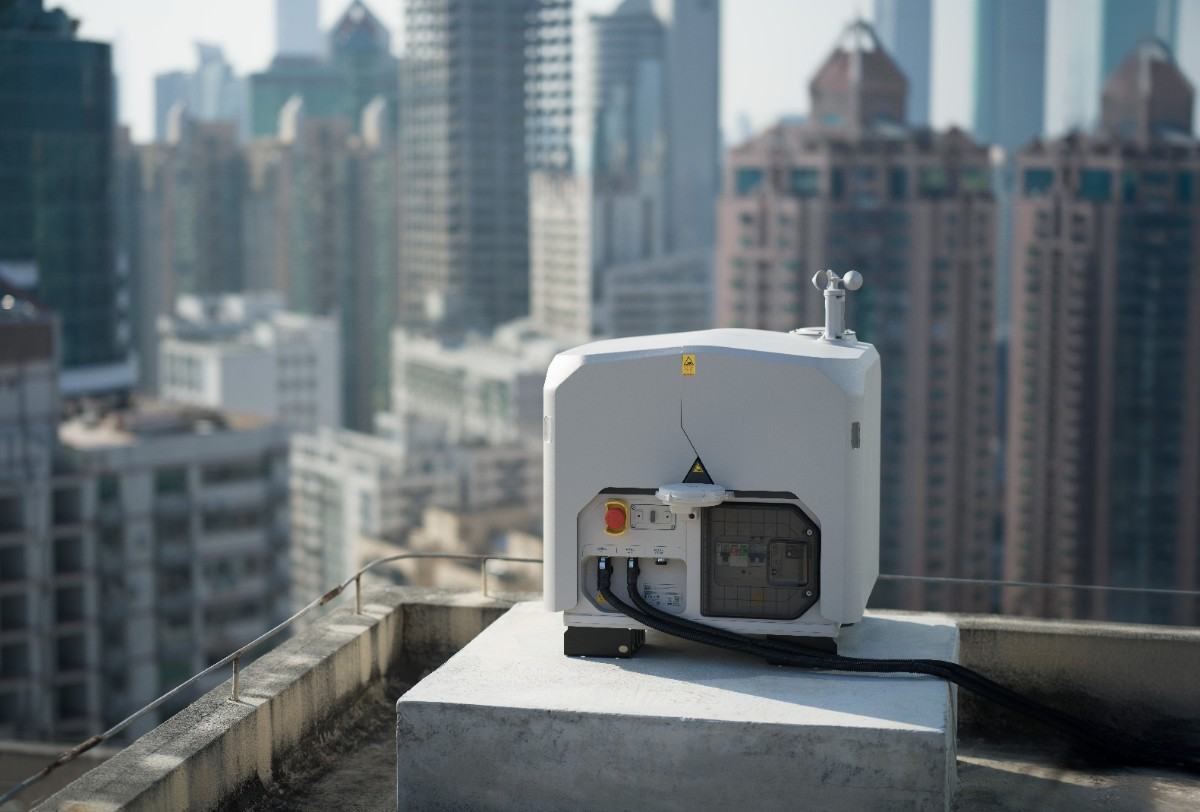
Does a drone-in-a-box need a pilot on site? It is designed to fly unattended, but fully pilotless flight is a BVLOS operation requiring a GCAA waiver in the UAE. Many sites run the system with a licensed remote pilot providing oversight to stay within standard rules.
What internet connection does a drone-in-a-box need? A resilient, higher-bandwidth link, usually cellular across more than one network, often with a satellite backup such as Starlink. It has to carry full-resolution survey data, so a light status-only connection will not do.
Can a drone-in-a-box handle UAE summer heat and dust? A well-specified system like the DJI Dock 3 with thermal management and proper sealing operates through the year. Heat, dust, and wind will occasionally reduce daily flight windows, which a good deployment plan expects.
How much power does the docking station need? Continuous, stable mains power to keep the drone charged between flights. Standard site power is usually sufficient, though a backup supply is worth adding where the feed is unreliable.
The technology is ready; the deciding factor is whether the site can host it well. Sort out siting, power, connectivity, climate protection, and the approval model before the hardware is on order, and a drone-in-a-box delivers the daily view it promises. Get one of them wrong, and even the best system underdelivers.
If you are weighing a drone-in-a-box for an upcoming project, get in touch with us today for a site-readiness review before you commit to hardware.