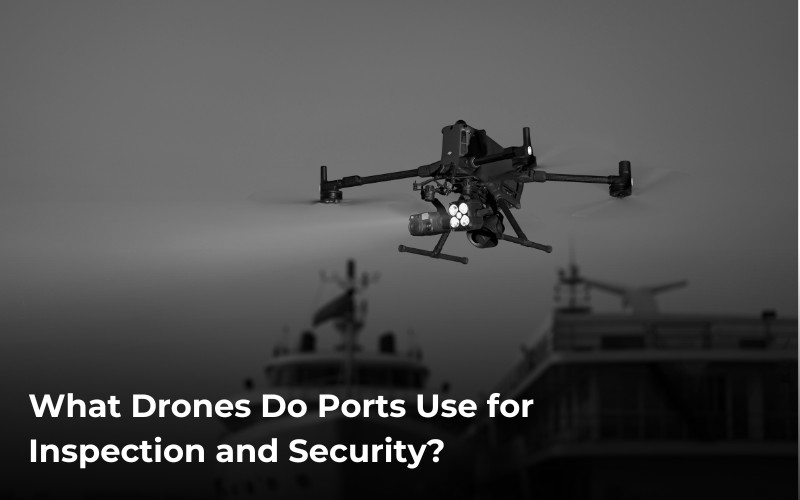
Ports typically use three types of drones: a multi-sensor enterprise drone for inspection and survey, a compact thermal drone for quick, repeat jobs, and a docked drone for security patrols and alarm response. Most terminals run two of the three, and the larger ones run all three.
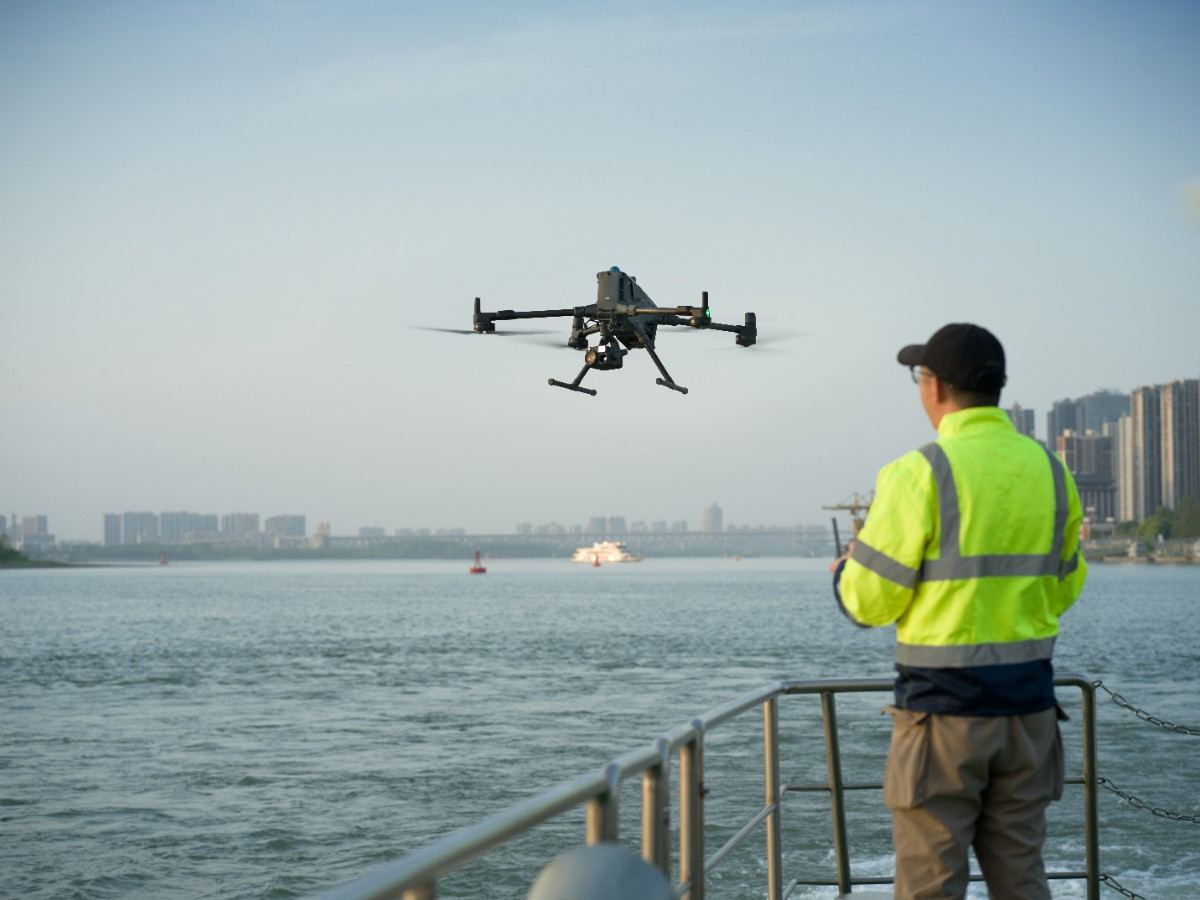
Inspection and survey: A larger enterprise drone with a multi-sensor camera, such as the DJI Matrice 400 with the Zenmuse H30T, inspects cranes, quay walls and stockpiles. Its zoom and thermal cameras let crews check structures from a safe distance.
Quick, repeat jobs: A compact thermal drone, such as the DJI Matrice 4T, handles portable tasks that need a fast launch. It fits in a response vehicle and flies for up to 49 minutes.
Security patrols and alarm response: A docked drone, such as the DJI Matrice 4TD with DJI Dock 3, launches and recharges from a weatherproof base with no pilot on site. It can fly scheduled patrols or launch as soon as an alarm goes off.
Each inspection task needs a different sensor, which is why one drone setup rarely covers a whole terminal.
Cranes: Ship-to-shore cranes and yard cranes (the rubber-tyred gantry cranes that stack containers) can be inspected without taking them out of service or sending up a rope access team. The drone needs enough zoom to inspect from a safe distance, outside the crane’s working area.
Quay walls and fenders: The quay wall where ships berth, the rubber fenders that cushion them and the bollards they tie up to can all be checked from the water side without a boat. Worn fenders and cracked concrete can be spotted before they need major repairs.
Container yards: Drones check stack condition, open doors, broken seals and misplaced containers across a yard that takes hours to walk. Regular flights give a quick picture of the yard between physical audits.
Bulk stockpiles: Drones measure the volume of stockpiles such as coal, grain or aggregate from a 3D scan. For a bulk terminal, that feeds directly into stock counts as well as inspection.
Tank farms and pipework: Drones check roof condition, insulation, corrosion and hot spots across fuel storage areas. This matters most at terminals that refuel ships or handle energy products.
Ships at berth: Hull condition above the waterline, deck layout and mooring lines can be recorded without a surveyor going over the side. The terminal also gets a dated record of the ship’s condition while it was alongside.
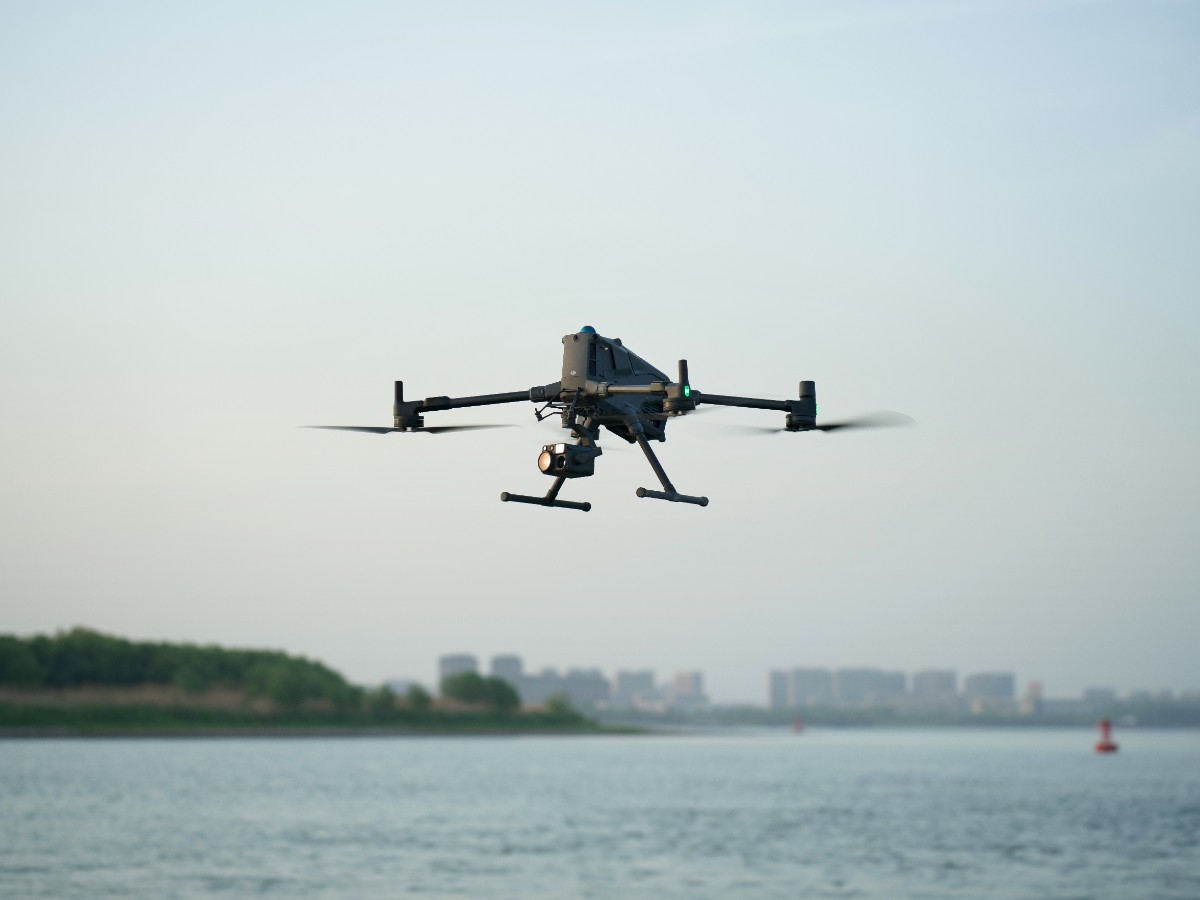
This combination covers most port inspection work. The H30T carries a 48 MP wide camera, a 40 MP zoom camera with 34x zoom, a 1280 x 1024 thermal camera and a laser rangefinder that measures up to 3 km. The zoom means a crane boom can be inspected in detail from well clear of the structure and yard traffic, and the rangefinder puts a location on each defect so the maintenance team can find it again.
The Matrice 400 flies for up to 59 minutes and can carry up to seven payloads. It can also take a LiDAR scanner or a mapping camera, so a terminal can run crane inspections in the morning and stockpile measurements in the afternoon with one drone. Its radar and LiDAR sensors pick up thin obstacles such as cables and mooring lines, and it can take off from and land on a ship.
For quick and repeat jobs, the Matrice 4 Series is the lighter option. The Matrice 4T carries wide, medium and long zoom cameras, a thermal camera and a laser rangefinder that reaches 1.8 km, with up to 49 minutes of flight. The Matrice 4TD carries the same sensors on a tougher, weather-sealed body, flies for up to 54 minutes and, most importantly, works with a dock.
A dock removes the need for a pilot at the launch point. The drone sits in a weatherproof base, recharges between flights and launches on a schedule or from a control room at the press of a button. Dock 3 is rated IP56 against dust and water, works from -30°C to 50°C and handles winds of 12 m/s during take-off and landing. It can also be mounted on a vehicle, so it can be moved to a berth or an incident.
For a terminal, that means regular patrols through the day and night, and a drone in the air soon after an alarm.
Less common but growing. Heavy-lift drones can carry spares, documents and small parts between the shore and ships at berth or at anchor, lowering them on a 30 m winch without landing. The FlyCart 100 carries up to 65 kg over 12 km, or 80 kg over 6 km. For a port, it can replace a boat trip during rough sea conditions for small, urgent deliveries.
Port security uses the same drones with a different routine.
Alarm response: A docked drone can launch automatically when a perimeter sensor is triggered and send live video of the spot to the control room within minutes. Staff can see what set it off before sending a patrol and detect false alarms without wasting resources.
Night-time checks: Thermal and zoom cameras together can tell a person from a vehicle or a false alarm at night. The drone with thermal sensors does not need floodlights, so it does not give away its position.
Scheduled patrols: Fixed routes flown on a timetable give a consistent record across a terminal that is too large to patrol fully on foot. Each flight is recorded, which helps when an incident needs to be checked later.
After storms or incidents: Berths and structures can be checked quickly without sending people into an area that may not be safe. Teams see the damage first, then decide where to send crews.
Procuring the drone and configuring it with the right sensors is only half the story. Four things decide whether a port drone programme works.
Radio signal: Steel, cranes and heavy radio traffic weaken the signal between the pilot and the drone. Range figures on a specification sheet assume open ground, so plan for a weaker signal and use a relay drone or mobile network backup.
Moving machinery: Cranes, straddle carriers and trucks move on their own schedule, so flights need to be planned around terminal operations. Coordinating with the terminal’s operations team matters more than the drone’s own obstacle sensors.
Airspace: Most major Gulf ports sit close to busy airspace. Drone operations are coordinated with the relevant civil aviation authorities, and a port drone programme should be built around that framework from the start.
Data: Inspection images and security footage carry commercial and legal weight. Decide where the data is stored, who can access it and how long it is kept before the first flight.
What this looks like in the Gulf
Jebel Ali handled 15.5 million TEU (twenty-foot container units) in 2024, ranking ninth among the world’s container ports. As Gulf terminals grow, so does the area that has to be inspected and secured. Drones give port teams a way to cover more of it, more often, while keeping people away from heights, moving machinery and the water’s edge.
The right setup depends on the terminal: which structures need inspecting, how often, and whether security patrols need a pilot on site. Answering those questions first makes it easier to choose the right drones, payloads and docks.
Are you planning crane inspections, security patrols or a full port drone programme? Talk to our team and we’ll help you choose the right setup for your terminal.
WhatsApp us: +971 52 209 2367