From the most prominent features to subtle yet essential quality-of-life improvements, join us as we explore everything you need to know about the Matrice 350 RTK in this comprehensive guide.
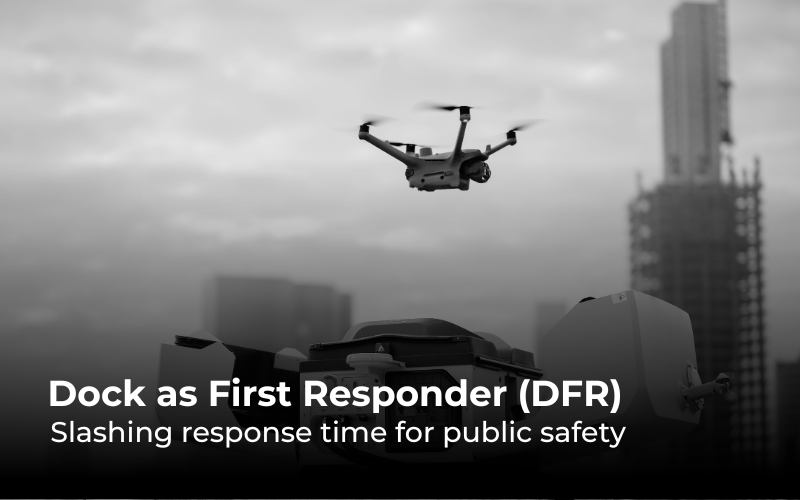
Drone as First Responder is a model where the drone is dispatched ahead of a ground response team.A trained operator at the command centre uses the drone’s live video feed to assess the scene before any human responder arrives.
Departments that have deployed the model including the Chula Vista Police Department in California, which pioneered the approach in the United States, have reported drones consistently arriving on scene in roughly half the time of ground units.With the drone clearing a meaningful share of calls before officers even arrive. Calls that would have required a full patrol response are resolved with a visual confirmation. Officers respond to emergencies equipped with the situational insight to resolve them quickly without further incidents.
The three factors that enable scaling is:. The drone needed to be reliable enough to launch unattended. The dock needed to be deployable in places drones are not already stationed. And the regulatory environment needed to permit beyond-visual-line-of-sight (BVLOS) operations. The first two are now true. The third is moving fast, the UAE’s General Civil Aviation Authority has been one of the more progressive regulators globally, and BVLOS frameworks here are advancing in step with operational demand.
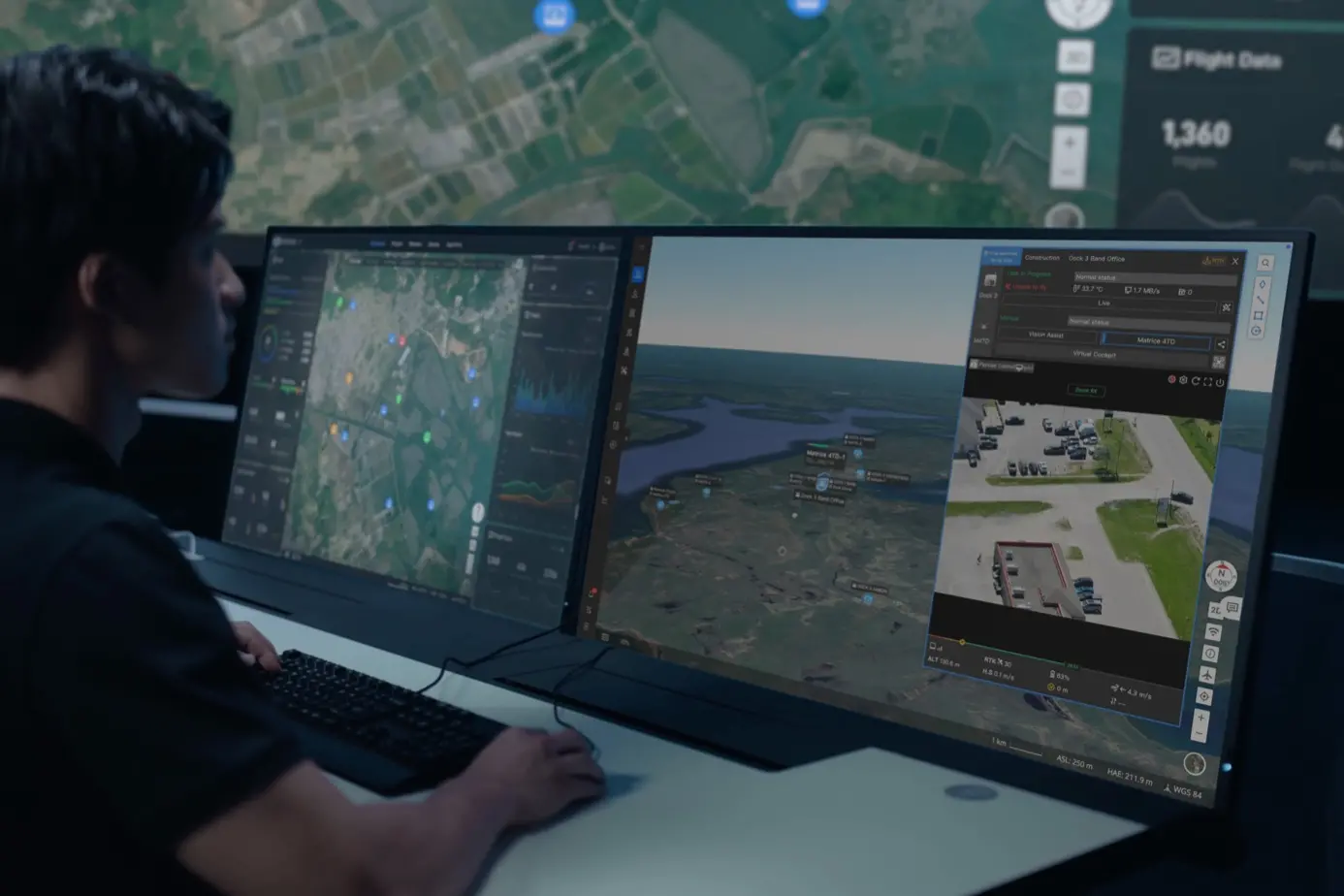
The DJI Dock 3 brings several upgrades over its predecessors, and the changes are aimed squarely at first-responder use.
Earlier, drone-in-a-box deployments have been fixed. Dock 3 is designed for more agile deployments like from the back of a vehicle even.
For first responders, this changes the operating model. A police vehicle, a fire engine, or a civil defence command unit can deploy a drone from the vehicle itself, anywhere, without pre-installed infrastructure. Two docks can be mounted on a single vehicle, enabling continuous overhead coverage by alternating drones. With a spotlight equipped, that overhead coverage runs through the night.
DJI Matrice 4D and Matrice 4TD systems are the most capable platforms DJI has built for this category.
Both feature:
The Matrice 4TD adds capabilities specifically tuned for emergency response: a 640×512 infrared thermal camera with UHR Infrared Image mode delivering up to 1,280×1,024 image resolution, an IR-Cut filter feature for black-and-white night vision, and a near-infrared auxiliary light covering up to 100 metres for night operations. The combination is particularly useful for locating missing persons in lowlight, identifying hotspots in fire scenes, and assessing thermal anomalies on structures.
Both aircraft carry a wide-angle camera, medium-tele camera, and tele camera (capable of reading details at 250 metres) along with a laser range finder accurate to within ±0.2 m + 0.0015 × distance. Incident commanders can capture an exact GPS coordinate of any point in frame.

Signal reliability is one of the most underrated factors in operational drone use. The new D-RTK 3 Relay extends maximum transmission distance to 25 km when strategically deployed. For deployment near high-rise buildings or communication towers installing the relay on a rooftop or tower addresses the signal obstruction issues that would otherwise constrain where the dock can be deployed. For the UAE, this matters: dense vertical urban environments are exactly the conditions where earlier-generation systems struggled.
DJI FlightHub 2, the cloud platform that runs the dock, has been upgraded substantially. Automated flight routes can detect and capture vehicles, vessels, and infrared anomalies, sending notifications to operators when something matches a defined trigger.
Intelligent change detection compares periodic flights to flag anything that has moved or changed since the last pass. Smart Track auto-zooms and follows a moving subject. Virtual Cockpit with the new Mouselook feature allows operators to “point and see,” with the drone automatically adjusting attitude and gimbal to centre any selected target in frame.
FlightHub 2 supports Cloud APIs, Mobile SDK 5, Payload SDK, and direct integration with platforms like FlytBase. That open-ecosystem approach matters for first responders, who almost always need the drone feed inside an existing operations centre, not a standalone DJI app.
The UAE has consistently been an early adopter of advanced public safety technology. Police, civil defence, and coast guard agencies in the Emirates already operate drone fleets at scale, and the regulatory environment has been built to enable BVLOS operations under structured authorisation.
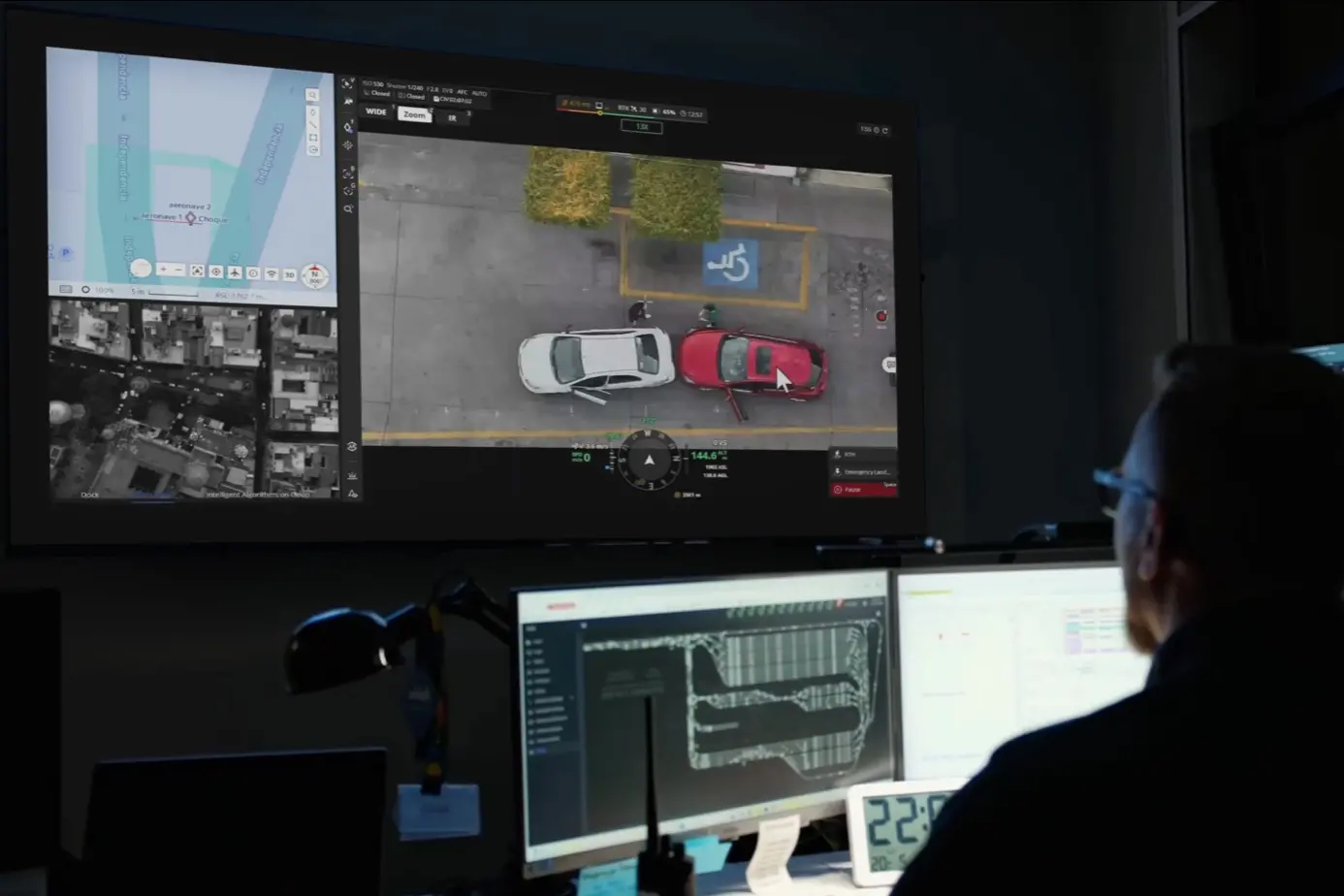
Several operational use cases sit at the front of the queue for Dock 3 deployment.
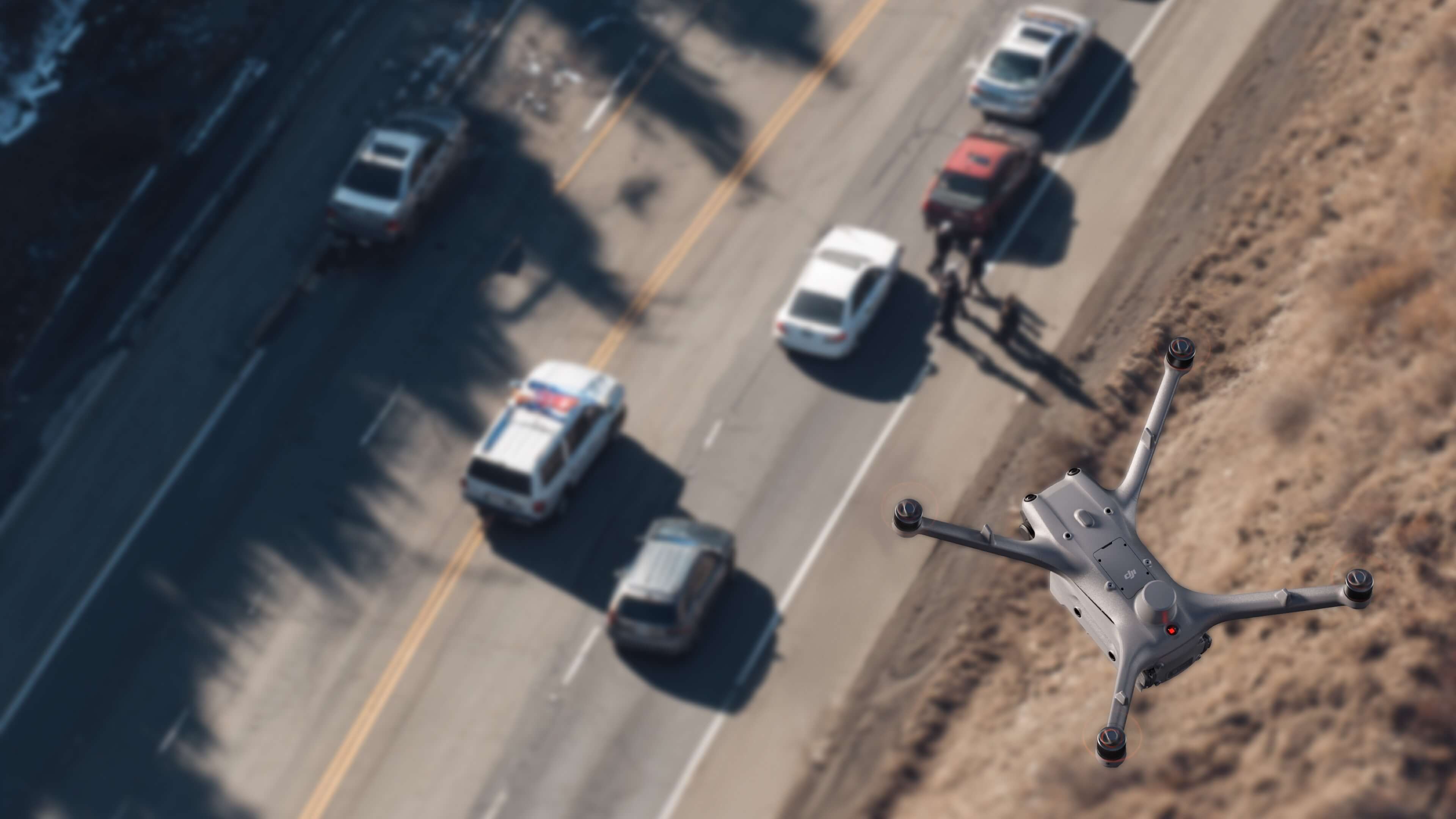
Highway and traffic incident response: A vehicle-mounted dock on a highway patrol unit can launch a drone immediately on arrival at an accident scene, securing the area for first responders, capturing scene documentation, and providing aerial coverage for traffic management.
With the Matrice 4D’s tele camera and laser range finder, full incident reconstruction data can be collected in minutes.
Fire and rescue: The Matrice 4TD’s thermal camera lets fire commanders see hot-spots through smoke, identify trapped occupants in low-visibility structures, and monitor fire spread in real time. During the summer months fire incidents occur in both urban and rural settings; a vehicle-mounted dock at the staging area provides continuous overhead coverage that ground crews simply cannot replicate.
Search and rescue: With the Matrice 4D Series’ onboard relay function where one drone flies high to relay signal for another flying further out, search radius from a command vehicle extends well beyond conventional limits. For coastal SAR and mountainous terrain alike, this expands the area a single response unit can cover.
Critical event response: Major events such as new year celebrations, exhibitions, sporting events, national days, and tourism gatherings, generate concentrated risk windows where rapid aerial coverage is operationally valuable. A vehicle-mounted Dock 3 can be deployed to any event site without permanent installation, providing autonomous overhead surveillance under direct command-and-control supervision.
Coast guard and port security: Vehicle-mounted deployment is particularly valuable for shoreline and port operations, where fixed-dock installations are limited by the geography of the asset. A dock-equipped vessel or shore vehicle can launch and recover drones along the entire perimeter of a facility.
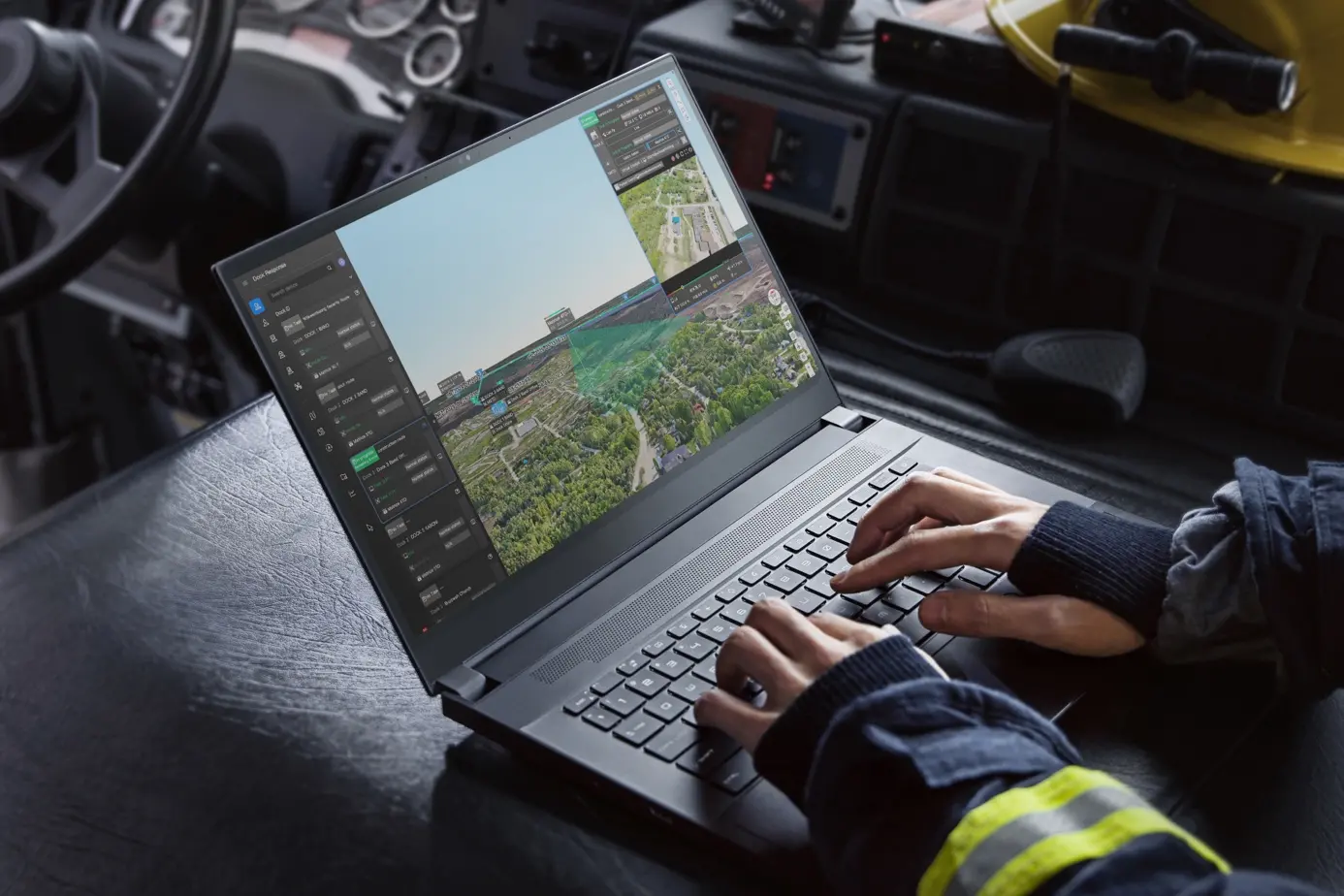
The DJI Dock 3 closes the gap between an emergency call and a response that’s already informed. Vehicle-mounted deployment removes the geographic limit on where a drone can launch from. The Matrice 4D and 4TD deliver the flight time and sensor range these missions need. FlightHub 2’s open API connects the drone to the systems responders already trust.
For public safety authorities across the region, the practical question is no longer whether a DFR model works. It does. The question is where to start, which response footprint, which fleet, which integration with existing command systems delivers the fastest operational value. That answer looks different for a metropolitan police unit, a coastal SAR team, and a civil defence command. Get in touch to discuss what the right starting point looks like for your operations.