For drone programmes running across the UAE and wider Gulf, the constraint has rarely been the aircraft. It has been both the battery and the signal. Autonomous docking stations such as the DJI Dock 3 have largely addressed the first problem, allowing aircraft to recharge and redeploy without a crew on site. The second problem, maintaining a reliable signal across distance and difficult terrain, has proven harder to solve.
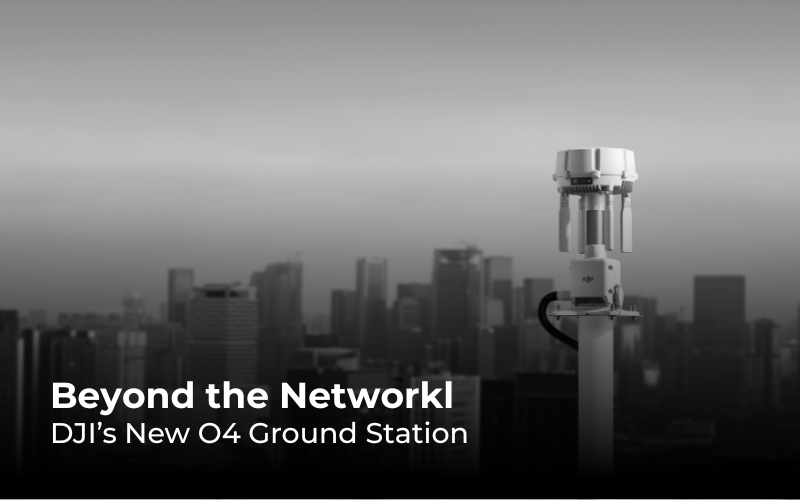
DJI’s recently released O4 Ground Station is built to close that gap. It combines a twelve-antenna array, automatic multi-band switching, and two distinct operating modes into a single unit, with DJI stating it extends coverage for Dock 3 operations to ranges that weren’t previously practical.
Most ground infrastructure for drone docks has been built on a simple assumption: that the dock and the operator sit close enough together, and that the network in between is reliable. The Gulf challenges that assumption on two fronts. Vast, difficult terrain pushes operators and aircraft apart. Dense city skylines block the signal even when the distance is short.
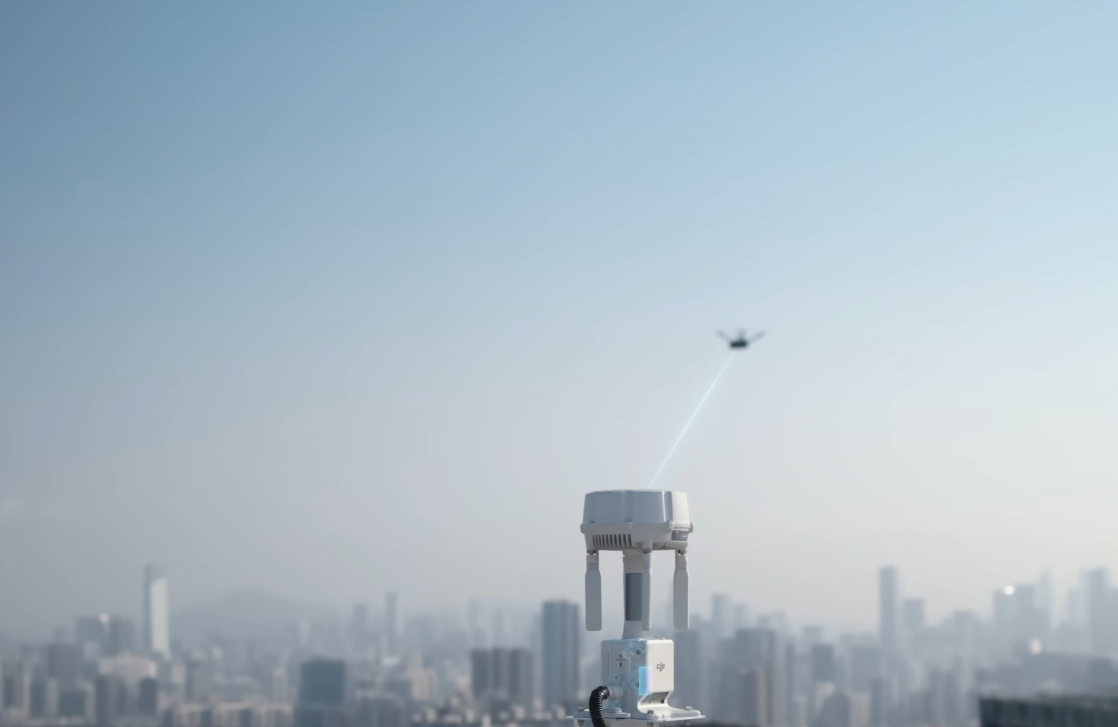
The O4 Ground Station changes that by giving operators two ways to maintain the link. In Gateway Mode, the station connects directly to DJI FlightHub 2 over Ethernet or cellular, extending coverage up to 30 km from the ground station itself. In Relay Mode, the system functions independently of network infrastructure altogether, useful in valleys, obstructed corridors, or sites where connectivity weakens due to external factors. Paired with the Matrice 400, the total transmission range extends to 40 km.
Hardware that sits outdoors in the Gulf faces a specific set of demands that most equipment isn’t designed around.
The O4 Ground Station carries an IP67 rating and is specified to operate across a temperature range of -40°C to 55°C, with no fans or moving parts. DJI states the unit includes a self-recovery mechanism that resumes operation automatically after a power interruption, without requiring a technician on site. For installations at elevated points, transmission towers or mountaintop relay positions, the unit is also rated to Category C (EN/IEC 61643-21) lightning protection standards, a detail that matters more during the region’s summer storm season than most specification sheets suggest.

A recurring obstacle for unattended drone deployment across the region has been power. Many of the sites that would benefit most from continuous aerial monitoring, remote substations, pipeline checkpoints, and agricultural land at the edge of irrigation networks don’t have reliable grid access nearby.
DJI’s approach here is smart power management. In Gateway Mode, the station is designed to hibernate automatically when no aircraft is connected, drawing roughly seven watts on standby. Combined with compatibility for DJI Power solar solutions or third-party photovoltaic systems, this opens the door to long-duration, off-grid deployment in locations that would otherwise require a dedicated power line.
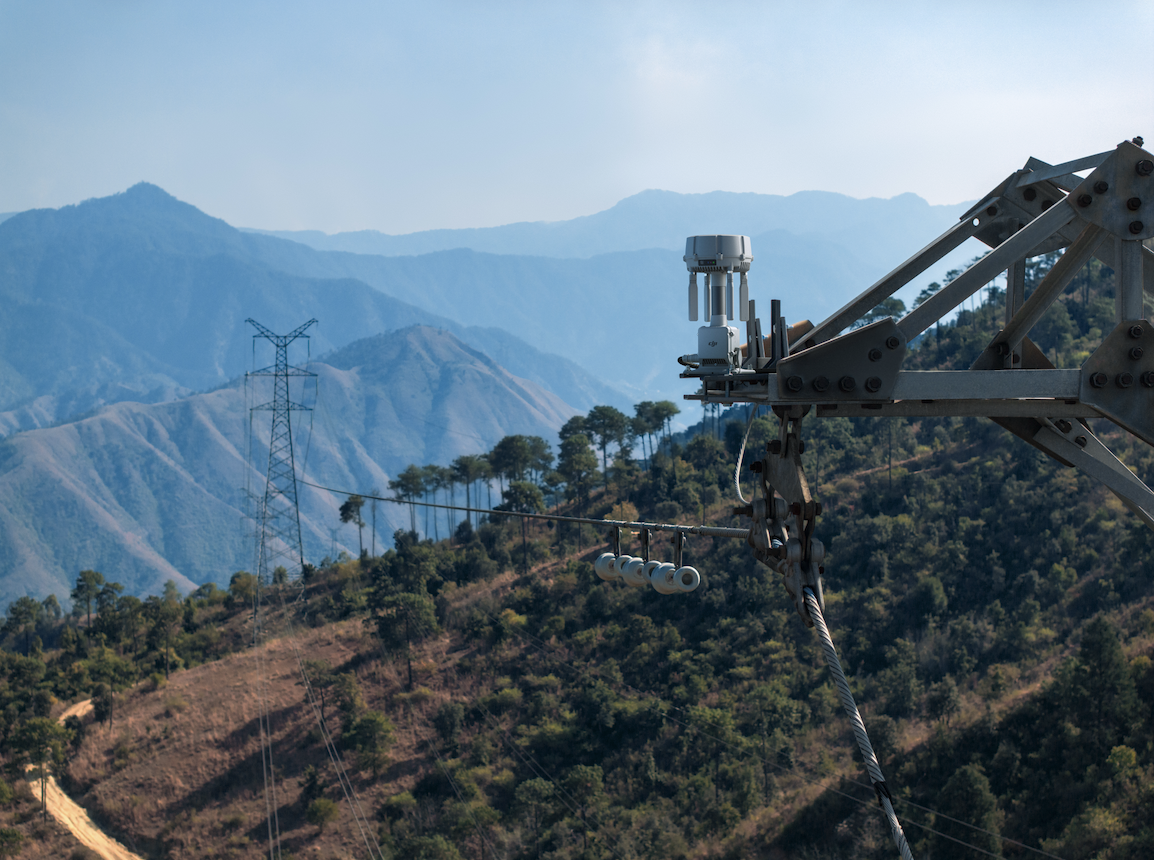
Utilisation has long been a quiet cost in drone fleet operations. A ground station that serves a single dock or aircraft is expensive infrastructure for limited use. DJI says the O4’s Relay Mode allows multiple remote controllers and docks within range to connect to the same station sequentially, meaning one installation could support fleet rotation across several aircraft rather than sitting idle between flights.
For organisations running inspection programmes across multiple sites, whether that’s transmission infrastructure, industrial facilities, or large logistics campuses, this turns a single piece of ground infrastructure into a shared asset across the operation.
Solve connectivity at this scale, and the rest of the operation changes shape. Inspection routes can cover dispersed assets without a technician following behind. Public safety incidents get rapid deployment. Remote facilities get a real-time response instead of a scheduled visit.
That is the constraint the O4 Ground Station is built to address, one that has quietly limited how far drone operations in this part of the world can run. As docks and fleets scale across the UAE and wider Gulf, ground infrastructure built for these conditions (heat, distance, dust, and unreliable network coverage) is becoming the deciding factor in which programmes scale and which stall.
To find out how the DJI O4 Ground Station fits into your operation, or to begin deployment, get in touch with our team today.