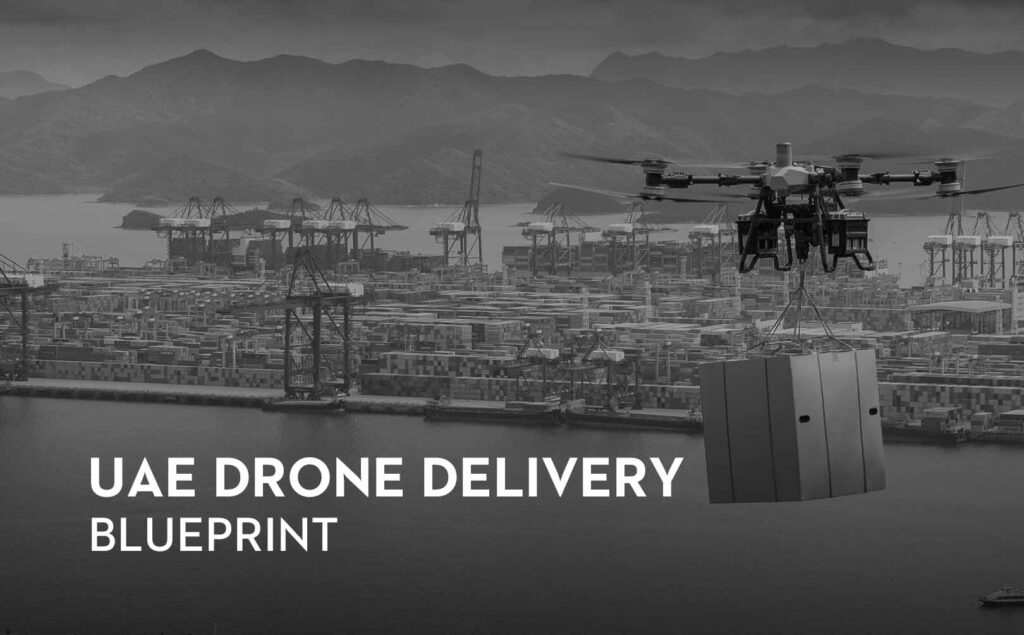
By using the sky, delivery networks can skip city traffic, cutting delivery times from hours down to minutes. This efficiency will redefine last-mile logistics, make services more reliable, and create new economic opportunities. This shift also lines up with the UAE’s sustainability targets by reducing carbon emissions from delivery trucks. The real potential, however, is in connecting the whole country, serving remote industrial sites, offshore platforms, and mountain areas with unmatched speed. This upgrade to the nation’s logistics network is creating a whole new way of doing business and serving the public, based on speed, efficiency, and sustainability.
The UAE is turning this big idea into a reality through planned, structured programs. The main effort is the “Dubai Programme to Enable Drone Transportation,” which started in 2021. This foundational plan is designed to build the advanced physical and digital systems needed for safe and large-scale drone use, create helpful laws, and grow a strong ecosystem of public and private partners.
The program’s progress is clear with the launch of the Middle East’s first active drone delivery system in Dubai Silicon Oasis (DSO). This trial, run by Keeta Drone, set up the first delivery routes connecting important spots like the Rochester Institute of Technology-Dubai (RIT-Dubai) and Dubai Digital Park, proving the concept works for delivering food and medicine. Using a specific zone like DSO is a smart “regulatory sandbox” strategy. It allows for real-world testing and data gathering in a controlled space. This approach lowers the risk for operators, regulators, and the public before a full city-wide launch. It speeds up the process of making the service available commercially by proving it is safe and efficient.
This goal is part of a nationwide strategy, not just for one emirate. Abu Dhabi is also moving forward with its own smart logistics, testing self-driving ground delivery vehicles in Masdar City. These parallel efforts in air and ground autonomy point to a future of fully connected, multi-modal logistics. Guiding this development are proactive regulators like the General Civil Aviation Authority (GCAA) and the Dubai Civil Aviation Authority (DCAA).
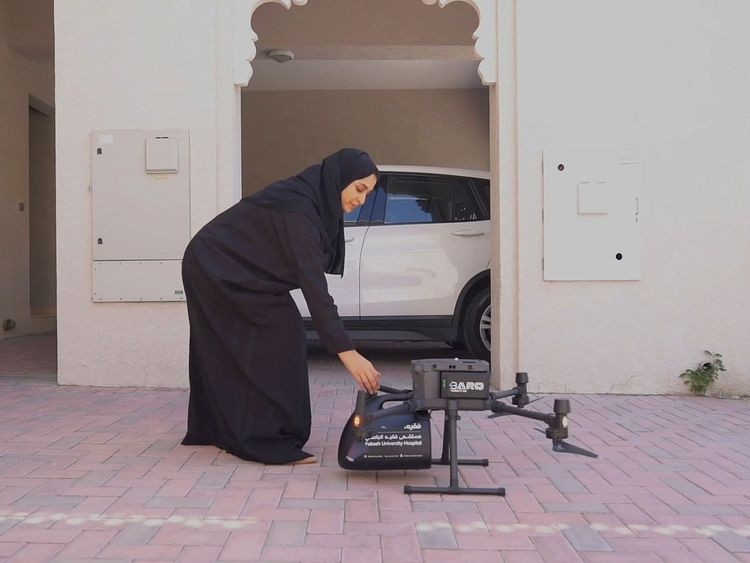
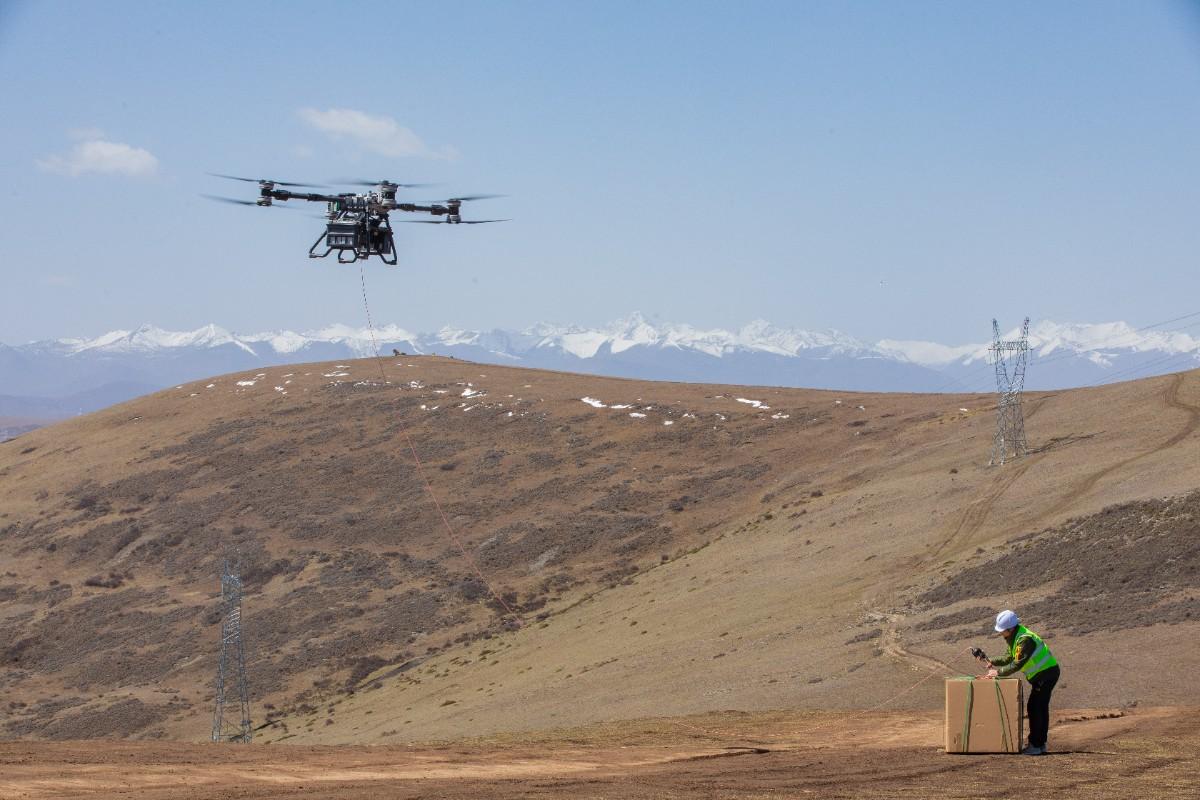
For projects of this scale to succeed, technology must evolve. While early models set the stage, the newly released DJI FlyCart 100 (FC100) has established a new benchmark for industrial aerial logistics. Designed to surpass previous limitations, the FC100 is the heavy-lift solution the UAE’s ambitious infrastructure demands.
The drone’s capabilities represent a massive leap forward. With a maximum payload capacity of 100 kg (in single-battery mode) and 85 kg (in dual-battery mode), it more than doubles the capacity of its predecessor. This allows it to transport heavy industrial tools, large medical stockpiles, and construction materials that were previously too heavy for aerial delivery. For the UAE’s specific needs, the FlyCart 100 introduces critical upgrades: a new O4 video transmission system for stable connection over long desert distances, and an advanced LiDAR sensing system that ensures safety in complex urban environments.
Operational efficiency has also been redefined. The FlyCart 100 features hot-swappable batteries, meaning it can land, swap power, and take off again without powering down—a crucial feature for high-frequency logistics hubs. Like its predecessor, it retains the versatile Cargo and Winch modes but with a reinforced heavy-duty winch system capable of handling the increased weight for precision drops on offshore rigs or high-rise balconies.
Feature | Specification (Dual Battery Mode) | Significance for UAE Operations |
Maximum Payload | 100 kg (Single Battery) / 85 kg (Dual Battery) | Enables transport of substantial goods, from industrial parts, construction materials, to bulk medical supplies. |
Flight Distance (Full Load) | 12 km | Optimised for connecting logistics hubs to remote industrial sites |
Maximum Speed | 20 m/s (72 km/h) | Drastically reduces delivery times compared to ground transport, bypassing traffic. |
Safety Sensors | LiDAR + Phased Array Radar + Binocular Vision | Provides superior obstacle avoidance in dense urban sectors. |
Max Wind Resistance | 12 m/s | Ensures operational reliability during seasonal shamal winds. |
Ingress Protection | IP55 | Protects against sand and dust, a critical requirement for the region’s environment. |
Delivery Modes | Heavy-Duty Winch (Electric Hook) | Allows automated, touchless delivery to secure locations or hazardous zones |
Max Flight Altitude | 6,000 m | Provides capability for operations in the UAE’s mountainous regions (e.g., Jebel Jais). |
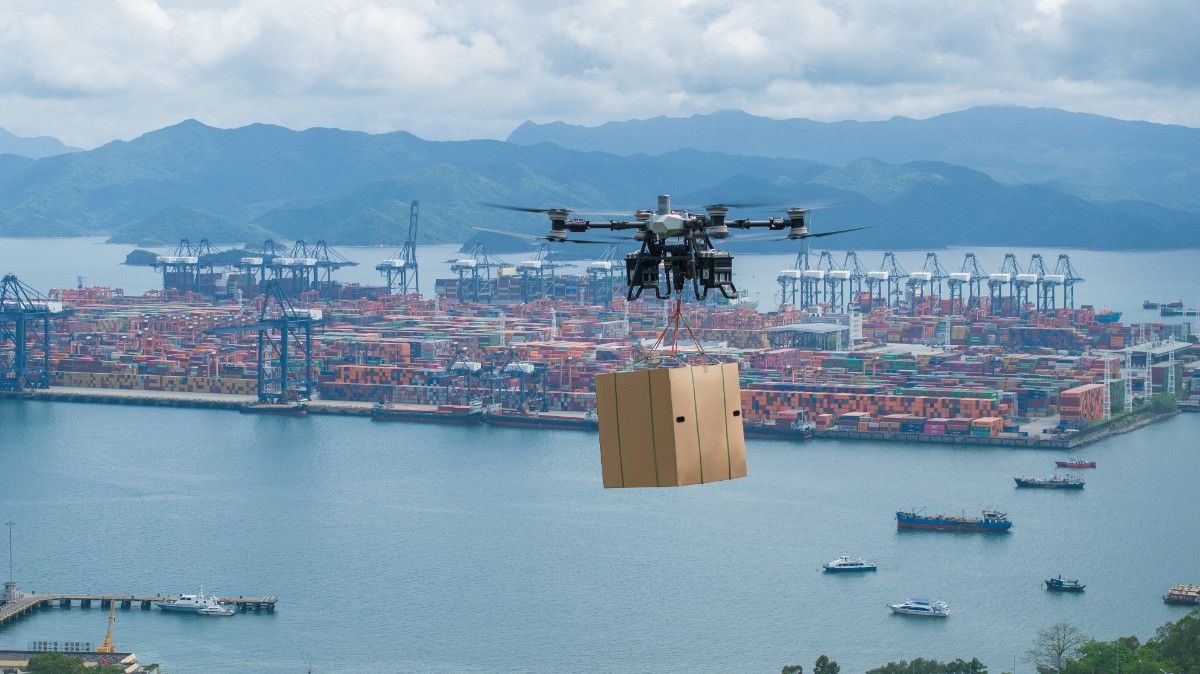
The potential of heavy-lift drone delivery is not a theory. It is being proven today in some of the world’s toughest environments. These global success stories provide a clear blueprint for the kind of impact the technology can have in the UAE.
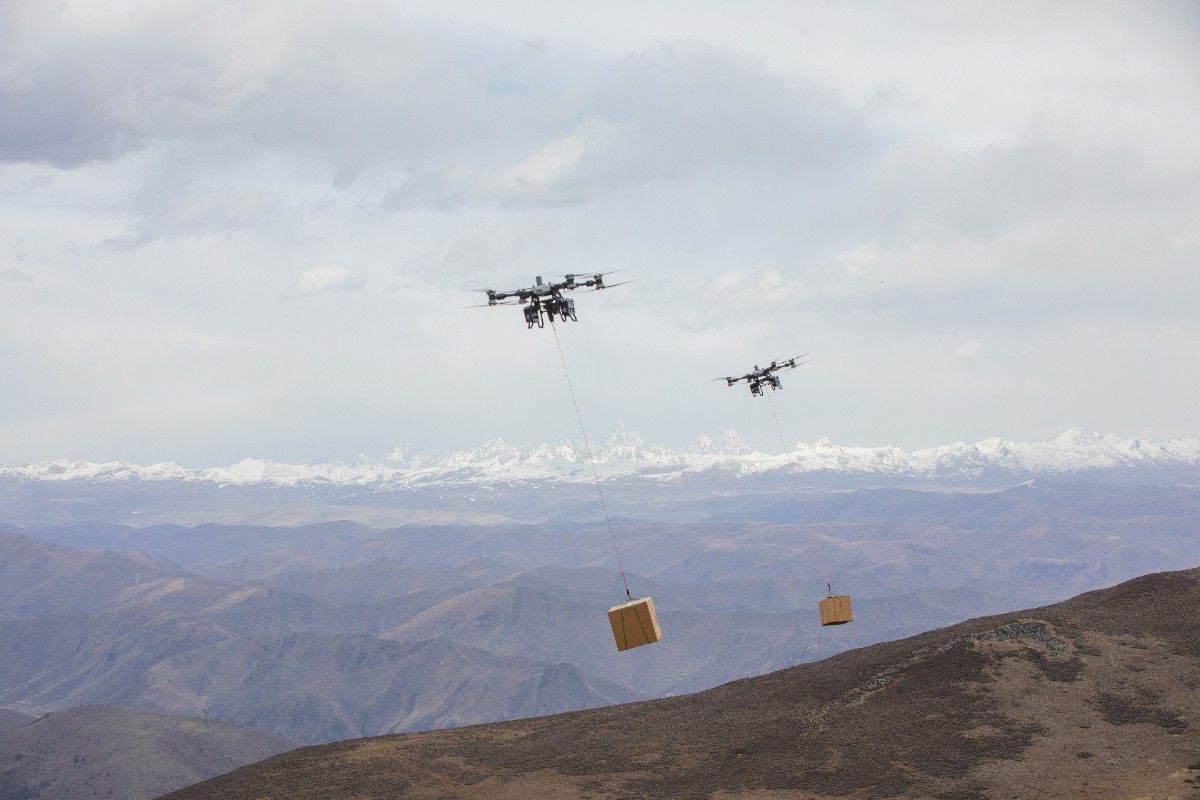
The best example of this is the recent use of the DJI FlyCart 30 (the FC100’s predecessor) on Mount Everest. For years, moving supplies across the dangerous Khumbu Icefall was one of the riskiest jobs in mountaineering. It required Sherpas to make a difficult 6 to 8 hour journey on foot. In a groundbreaking operation, the FlyCart 30 carried over 1,250 kg of important supplies, like oxygen bottles and gear, from Base Camp to Camp 1. The mission was a huge success and accomplished three key things: it improved human safety by removing the need for dozens of dangerous treks for Sherpas; it made operations more efficient by finishing the journey in minutes; and it helped the environment by carrying accumulated waste back down the mountain. This operation proved the reliability of DJI’s delivery platform, paving the way for even more capable FlyCart 100 to take over heavier industrial delivery missions.
This technology is already creating great value in several industries that are important to the UAE’s economy:
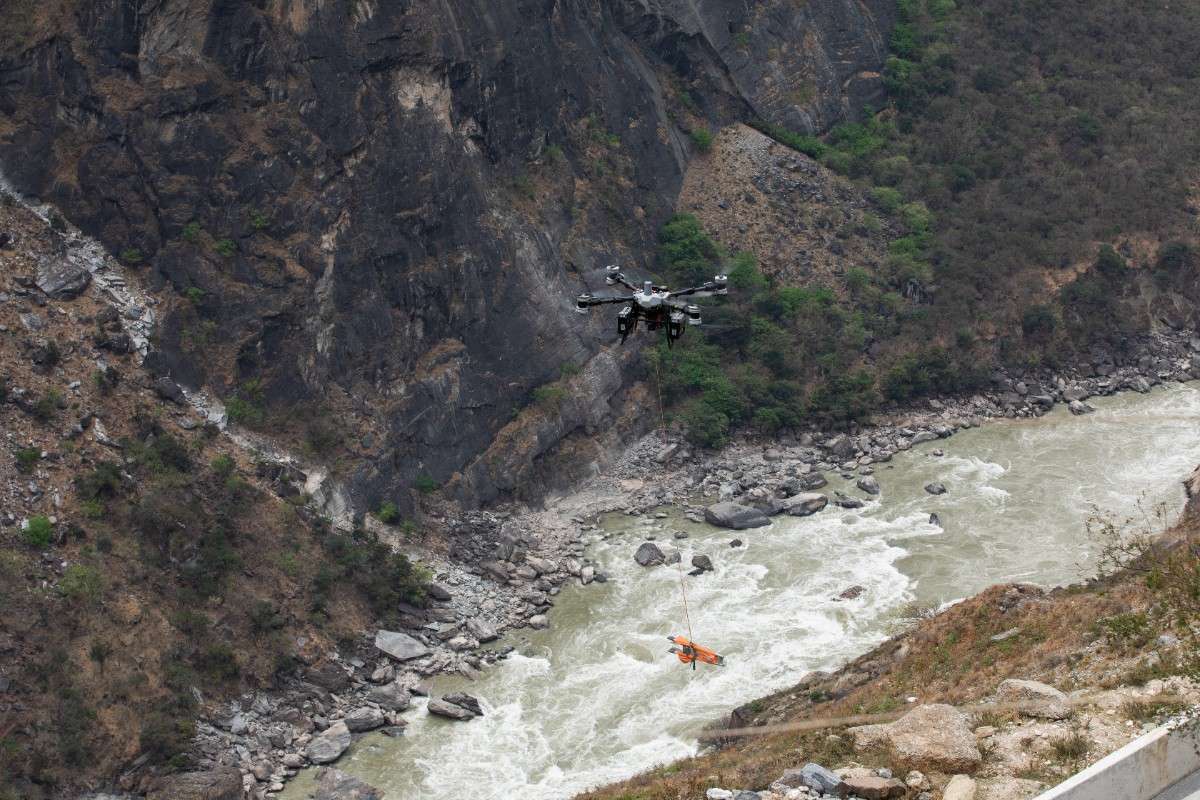
In construction, the DJI’s delivery platform delivered 400 solar panels to a remote mountain site in a single day. This task would have taken 20 days with manual labour, making the process twenty times more efficient. For resupplying ships at sea, the drone reduced a 30-minute boat trip to a 6-minute flight, saving a lot of time, fuel, and labour costs. This model is directly useful for the UAE’s important offshore energy and shipping industries. In public safety, search and rescue teams are using the drones to deliver life-saving medical equipment to disaster areas in minutes instead of hours. They use the winch system to reach places where landing is not possible.
Also, the success of large-scale medical delivery networks in African countries like Rwanda and Ghana shows the power of a national system. These networks have led to major public health improvements, including a 67% drop in wasted blood products and a 51% drop in maternal deaths from bleeding after childbirth. This proves that drone logistics can be a mission-critical service for an entire country.
The UAE is in a unique position where all the key elements for a drone logistics revolution have come together. A clear government vision, with proactive regulatory support, has created an unmatched environment for growth. This is combined with the availability of proven, environment-ready technology like the new DJI FlyCart 100 and a long list of successful global use cases that offer a clear path for getting started.
The future uses within the UAE are wide and varied. Drones will become necessary for supporting the nation’s giga-projects, delivering parts and supplies to huge construction sites in remote desert and mountain regions. In the energy sector, they will be a lifeline to offshore oil and gas platforms in the Arabian Gulf, improving both efficiency and safety. Within cities, the goal to cover 33% of Dubai with drone delivery services by 2030 will become a reality, connecting logistics hubs and offering premium services to homes and offices. A rapid response medical network, based on proven models, could connect every hospital and clinic in the Emirates, saving critical time and lives.
Ultimately, the UAE is not just adopting drone delivery; it is designing the future of smart, sustainable, and efficient city logistics. The programs and pilot projects happening now are setting a global standard for how to blend a new form of transportation into a country’s economic and social life. By building this system first, the UAE is positioning itself not just as a user of this technology, but as a future global centre of excellence and an exporter of the know-how needed to build the cities of tomorrow.